As the issue of overheating iPhones heats up, Apple might be preparing to point the finger at iPhone owners who fail to keep their iPhones within acceptable temperatures.
Apple recently updated its knowledge base advising iPhone owners how to keep their devices within acceptable operating temperatures.
For many, this was not the answer they were hoping for because Apple’s solution to an apparent defect appears to be to place the burden on the user to ensure their iPhone’s temperature remains within an acceptable range.
What’s troubling about Apple’s position is that it sets the stage for Apple to adjust its iPhone service policy based on the argument that damage caused by overheating the iPhone is the fault of the iPhone’s owner – not Apple.
That’s right, if you bought an iPhone with a defective moisture sensor that subsequently gets tripped by sweat or humidity you have to pay Apple $199 for a replacement under the theory that Apple cannot confirm that your iPhone was not exposed to water.
What it is: Lala is a newish (about a year old) web-based music marketplace, but to brand it as simply that does an extreme disservice to an interesting, innovative Internet destination that, given enough publicity, strong management and bit of good fortune could become the first online music store to give iTunes a real run for its money as a music distributor.
Why it’s cool: When I was a kid growing up in Memphis, Tennessee, I spent uncounted hours in the music listening rooms at the back of Pop Tunes on Summer Avenue, where I discovered the heritage of the city they call the Home of the Blues, and learned about the ground-breaking artists who gave birth to the Blues’ baby, Rock & Roll.
Pop Tunes was a great spot to get in out of the hot summer sun or the cold winter rain, where I could browse the racks, amassing a stack of LPs and 45s, both old and new, and head for one of the four or five sound-proof listening rooms at the back of the store, where I’d listen to my heart’s content before deciding which of the albums or singles my meager allowance or paper route money would buy me any given week.
By the time I left home for college in another of the great music cities in the US - New Orleans - I had a music collection numbering over 1000 lp records and another few hundred 45rpm singles.
What does my ancient music-buying experience have to do with Lala and this review? Join me after the jump, where I try and tie it all together for you.
An intrepid software developer has published a thorough memoir that details many reasons why Apple is so far ahead of the field in the mobile applications game, and why Blackberry, Palm and Android will have a hard time catching up any time soon.
Marcus Watkins found himself developing an application for his mobile phone in much the same way that countless other developers undoubtedly realized their inspirations: he was minding his own business when he realized one day his life would improve if his phone could do something that, at the point of his epiphany, it couldn’t.
He did his research, found out there wasn’t an application to meet his needs, realized the size of the potential market for his app in the many millions of people with his phone - a good percentage of whom might find his application useful - and he went to work.
Unfortunately (perhaps) for Watkins, his phone is a Blackberry, but fortunately (for Blackberry users) he persevered, and his story shows just how far behind Apple the other smartphone makers are as the device category enters its third year in existence.
The Apple blogosphere percolated with spitting and popping yesterday after Daring Fireball reported that iPhone and iPod Touch users might find reasons to be excited about the impending release of QuickTime X in Snow Leopard.
The possibility of native .flv file support in QuickTime X meant that support for Flash video - probably the biggest item remaining on many people’s wish-list for iPhone - could soon be a reality for Apple’s mobile device users. The story was picked up by TechCrunch and we were off to the races.
Turns out to have been a false alarm, triggered by an over-eager post at Cateto blog, occasioned by a bit of software confusion, but still…
The point here is that with Perian, a free open source plug-in for QuickTime, Flash on the iPhone and iPod Touch would be conceivable, no matter the difficulty of Apple and Adobe executives and legal departments finding a way to get on the same page about it all.
As a child of 1980s gaming, I’m used to injury from videogames. In my younger days, I got arm pain from too many hours parked in front of the Atari and C64, and even recent years have seen pain caused by ‘too much Space Invaders Extreme DS’ syndrome.
Therefore, although it came as something of a surprise that I’ve now been injured by iPhone gaming, it probably should have been expected. Two days ago, I had rather serious pain at the end of my index finger. Closer inspection showed that the finger surface wasn’t returning to normal when prodded. And the middle finger was also showing symptoms.
Puzzled and in quite a bit of pain, it dawned on me that Flight Control was to blame. Too many hours landing tiny planes on tiny airports caused finger damage reminiscent of my guitaring days. Unfortunately, since I’m British and therefore only have the ability to complain about things in a vaguely sarcastic and satirical fashion, rather than unleash laywers on Apple, Firemint and any current manufactureres of aircraft and videogames (no matter how related), I’ll have to content myself with the fact that Flight Control’s recent update is rather spiffy, rather than rolling around in my underpants on a $100,000,000 out-of-court settlement.
Outside of the iPhone brouhaha, much of the buzz at WWDC today has been about whether the system-level support for Microsoft Exchange e-mail and calendaring in OS X Snow Leopard and various encryption options for Mac and iPhone would finally allow Apple to make serious in-roads in corporate America. Well, at least if corporate IT guys will give them a chance, that is.
In spite of Lonnie’s optimism, I think Apple is just as far today from mainstream adoption in big business as it was yesterday and pretty much every day of its entire history. As I’ve written before, the Steves founded Apple in large part because they thought that the IBMs and HPs of the world were holding back the potential of computers to transform our society.
Consequently, the organization’s entire self-image and frame of reference over time has been that big business is all too willing to adopt mediocre technologies based solely on a reputation for reliability. Macs have long provided superior tools for creative endeavors like graphic design and video editing, which is why Macs have a huge niche in corporate marketing departments, but the same can’t be said for other business pursuits.
Apple has a huge opportunity right now to make serious in-roads in the enterprise market while corporations resist upgrading to Windows Vista and don’t yet know whether or not they can trust Windows 7. But Apple won’t make big gains unless they take more drastic measures, three of which I outline below. Bear in mind, I’m not saying this is what Apple should do, just that this is what it would take to succeed in business.
Start making cheap computers with standardized parts.From the early 1990s until the sale to Lenovo, IBM’s ThinkPad line of notebooks defined the look, feel and attitude of computers for business. They were black, rugged, and nearly identical in industrial design. A machine from 1999 looked pretty much the same as one from 2003. Corporate IT managers loved ThinkPads because people generally couldn’t tell if their co-workers had a newer or better machine than theirs — the exterior was always a constant. All that, and frequently replaced parts like batteries and power supplies were common across the decade. If it worked on one, it worked on another.
Recent years have seen the trend that IBM began extrapolated upon in the corporate market. These days, it’s not just that corporations prefer to buy identical machines for employees at all levels — they’ve also chopped their budgets for PCs dramatically while increasing spending on servers and data centers. And that means that low-cost strategy players like Dell and HP are winning with large-screen machines for less than $500 (or significantly less at large volumes). If Apple wants to even think about competing, it would need to get cheap quickly and make compromises that the company has diligently avoided over the years. And do you really think business wants a line-up of laptops without replaceable batteries? Not in this galaxy.
With or without Steve Jobs, Apple has the best lineup of hardware and software it has ever offered.
All in all, the WWDC keynote showed that Apple is paying attention to all the right things. It’s got a great line-up of affordable hardware that’s fast, feature-packed and environmentally friendly. The software loaded on top is designed for user-freindliness and ease of use. And Apple is no longer alone: it has thousands of partners in software and hardware who will push Apple’s platforms in new directions.
And while Apple is making a stealth enterprise play by supporting Micorosft Exchange, it’s not devoting features or resources to taking on Microsoft head on. Instead, Apple is concentrating on its core market: home users. And it’s got a killer lineup for consumers, especially in software.
* The new iPhone 3GS is a killer device. The speed bump, better camera and digital compass (which will enable a raft of amazing location-based services) will tempt iPhone users to upgrade in droves. The iPhone is becoming finally a true mobile computer, and no one has anything that comes close.
* The $99 iPhone is the Palm Pre killer. Who now will pay $199 for an iPhone-imitator on Sprint, when the original costs less than half the price?
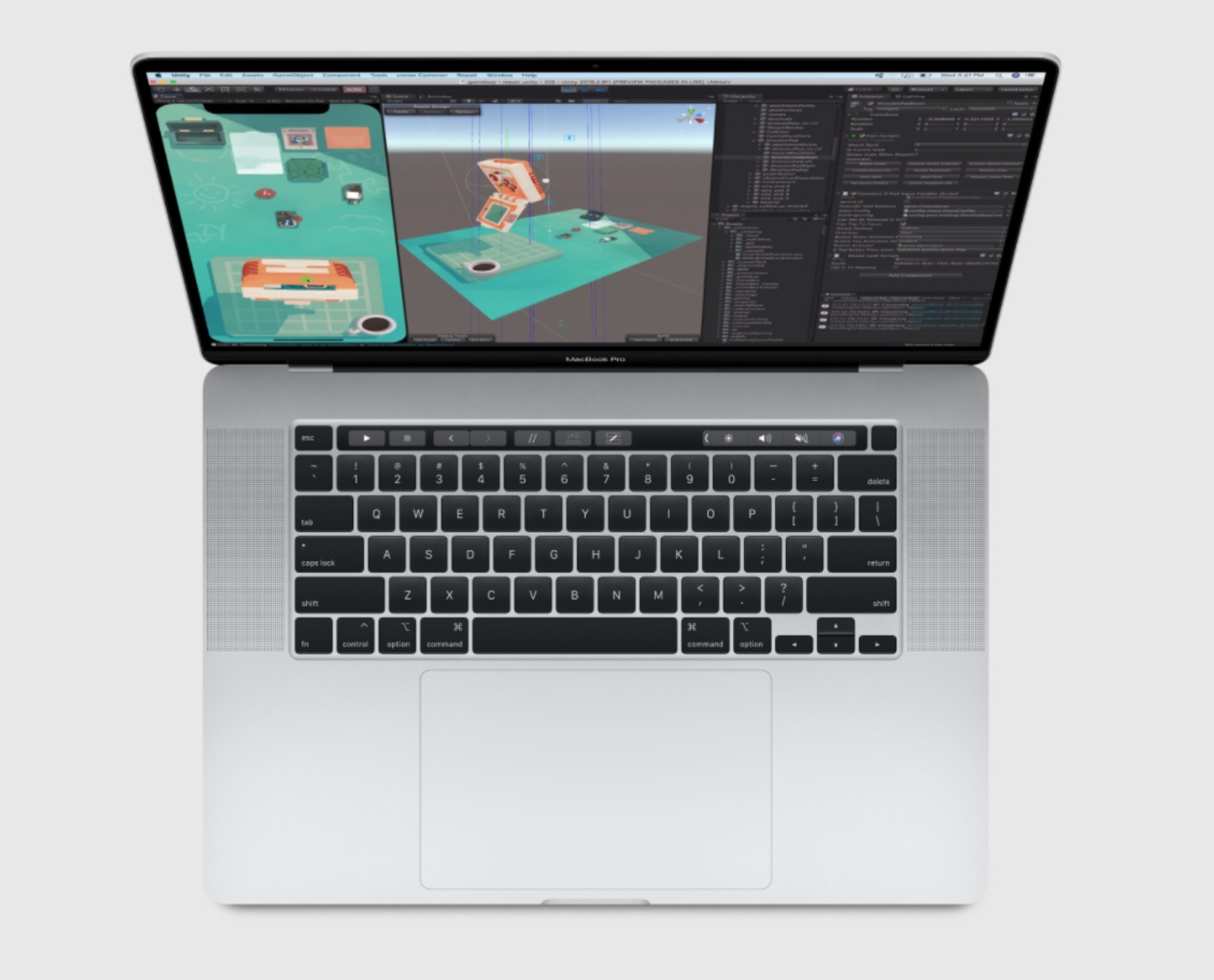
* The new MacBook Pro laptops running Snow Leopard are the best laptops on the market, bar none. Even if other laptops have good hardware, Microsoft’s Vista is their Achilles heel. With a great built-in battery, memory-card slots and the return of firewire, MacBooks will sell like hotcakes. Netbooks be damned. The real computing market — and most of the money — is in laptops, and Apple’s got the best available.
* Snow Leopard looks like a great upgrade, despite the lack of whizbang new features. Instead, it will offer upgrades in all the right areas: Web browsing, better multimedia, easy of use and speed. Snow Leopard has tons of little touches that will add up to an extremely polished, consumer-oriented operating system that focuses on the things consumers do — browse the Web, watch videos, and communicate with friends. That’s why things that seem small and minor — like today’s WWDC demonstration of easy video editing and uploading in QuickTime — really counts. Apple is focused, as usual, on improving the user experience. And unlike Vista, Snow Leopard delivers.
* Green. The new MacBooks are rated EPEAT Gold — the highest standard of energy efficiency, green production and recyclability.The importance of being green can’t be understated. There’s a huge shift in consumer attitudes, especially among Apple’s educated, upscale demographic, who are demanding environmentally-friendly products. Being green is a huge selling point, and Apple now offers some of the greenest hardware.
If there’s any reason for a business to shun Macs and the iPhone after Monday’s upgrade announcements at WWDC, it’s got to be because the IT department is on the take or it simply doesn’t want its employees to use the best computers and smartphone on the market.
Perhaps flying under the radar among major announcements of upgrades to the company’s notebook computer line, Apple offers with OS X Snow Leopard — and the new iPhone OS 3.0 — significant improvements to a few areas of special interest to business customers that should enable Apple’s devices to make greater inroads to acceptance in the enterprise market.
Chief among them, of course is new seamless integration with Exchange, the Microsoft mail/contacts/calendar service used by the vast preponderance of enterprise customers today.
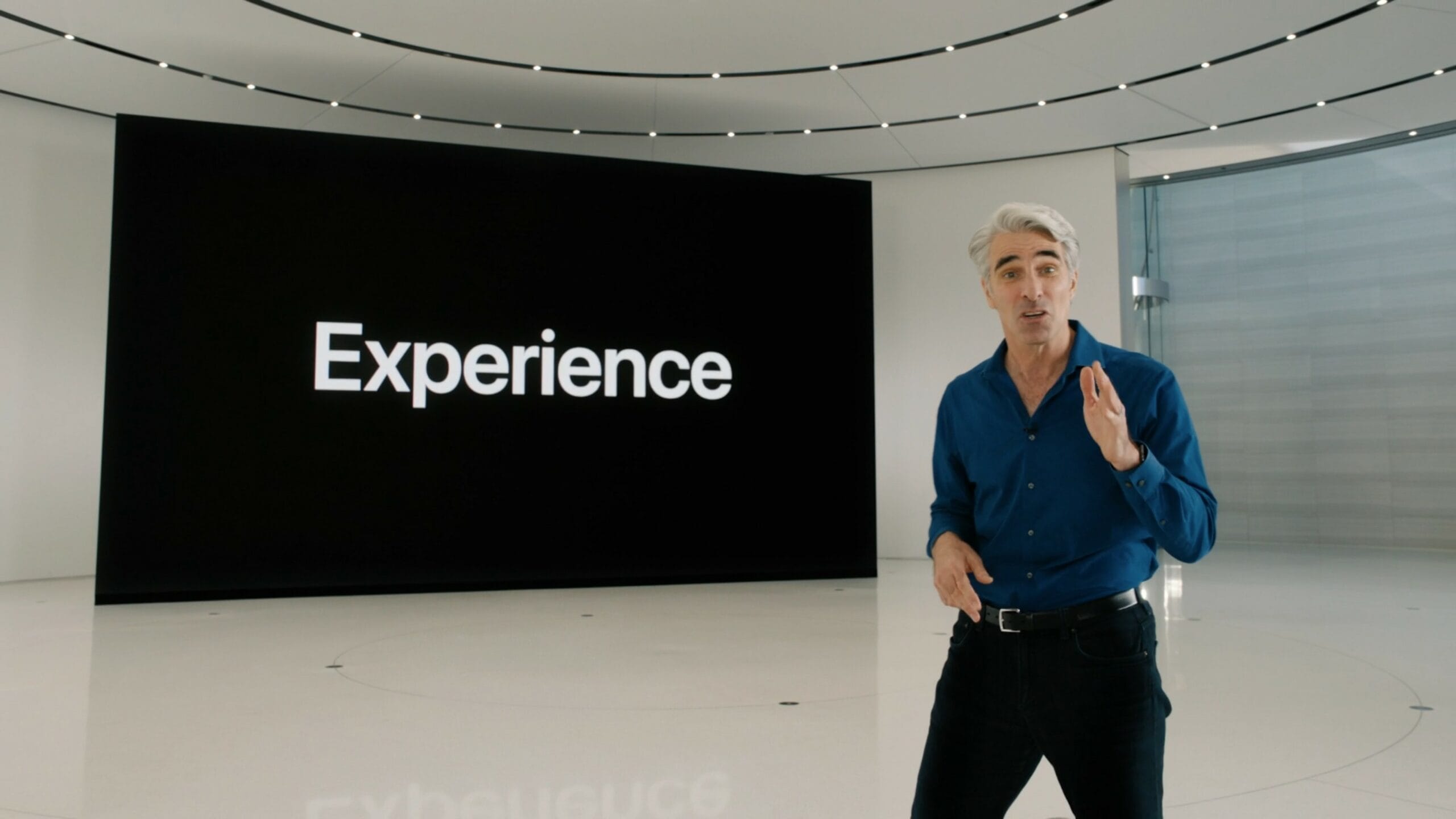
The WWDC demo by Craig Federighi, VP of Mac OS Engineering Monday showed how easy it is to add an Exchange account using Snow Leopard, with the OS supporting auto-discovery of Exchange servers, with all email/folders/to-do lists being automatically populated and Spotlight immediately able to search all data. Quicklook even lets users preview MS Office documents through Mail, even when Office isn’t installed on the Mac.
Event invitations can be accepted or denied right through Mail. iCal and Address Book automatically have all appropriate data once Mail is setup. One or more contacts can be dragged & dropped into iCal to automatically create a meeting and Calendar events support resource allocation, including people’s schedules and room availability.
What more does the IT department want?
How about data encryption for the iPhone, the ability to locate a user’s mobile device on a Google map using the new Find My iPhone service on MobileMe and remote secure data wipe for phones that are truly lost?
Apple has always been looked upon by enterprise interests as a maker of things for creatives and other ‘unserious’ users, but Monday’s announcements surely throw down a gauntlet in the matter of those who are serious about their computing and communications going forward.
In April, I got terribly excited about Flight Control, an air traffic control arcade-oriented ‘management’ game. The premise is simple: drag aircraft to landing areas. The reality is an intense arcade game where game over is a blink of an eye away.
Recently, I’d heard rumors of updates. But with the original game such a fantastic, simple and polished production, there was the worry that it’d be ruined under a pile of new features. That worry went away on playing Flight Control 1.2, which keeps the original’s gameplay intact but introduces two new airfields and new craft.
The beachside resort is the first new airfield, adding water landings to the mix. Initially, this seems little different to the original game, but the number of craft ramps up rapidly and the revised landing layout is tougher than the original’s.
The real star, though, is the intense and absurdly tricky aircraft carrier level. Military jets move just a tad faster than anything else, and you’re soon not only juggling that, but also a surprising twist when you realise what happens to landing areas on a moving ocean… Frankly, we’ll be shocked to see 10,000+ landing scores on this map for some time to come.
Overall, this is a triumphant update—a classic iPhone game made even better. The fact that it’s still under a dollar [App Store link], for a game that betters most other handheld titles out there, just goes to show what great value Apple’s platform can be for gamers.
TIPS: If you’ve any tips for dealing with the new airfields and getting high scores, please post in the comments below.
The iPhone Blog reports that OS X iPhone 3.0b is now throwing up error messages when you try to ‘redownload’ an app you’ve already bought. You get the option to buy again on your ‘iDevice’, or you can download again for free in iTunes.
Already, forums are up in arms about this (well, forum posters, given that forums haven’t quite arrived at a state of sentience), bitching about Apple being Big Brother and hating every single one of its users. However, it seems like the change is down to users ’sharing’ apps amongst several Apple devices.
With some devices and games—especially those specifically designed for network play—one might argue that multiple purchases can be somewhat unreasonable from a financial standpoint. (For example, you see plenty of $30+ DS games with broken or severely restricted wireless modes, a problem that magically goes away when every gamer has a cart.) But with the vast majority of App Store games being by indie devs and costing under five bucks (and manyofthebest costing under a single dollar), it’s easier to forgive being ‘forced’ to buy a copy for each device you own.
We’re now less than two weeks away from the keynote of Apple’s annual Worldwide Developers Conference, where Apple is widely expected to demonstrate a next-generation iPhone for the first time. I won’t run down all the anticipated features here, but suffice it to say that we’re looking at largely incremental updates on the hardware side: faster processor, more RAM, more storage, and maybe a programmable magnetometer to enable true turn-by-turn GPS. It will be the iPhone, but better — and almost certainly not a worthwhile upgrade if you already own an iPhone 3G, since it will also benefit from the release of iPhone OS 3.0.
But the world hasn’t stood still. For the first time since the announcement of the original iPhone, there are legitimate competitors all around, many of them even approaching Apple’s thinking in creating a holistic ecosystem of supporting software, third-party development and services. There are three big threats to the rise of the iPhone right now: Palm Pre, mass availability of Android, and the Zune HD platform. Hit the jump to get the full story.
What it was: A trackball-controlled arcade classic, released by Atari in 1984. You had to guide your marble through six perilous courses. Think Super Monkey Ball’s granddad, with a penchant for Escher and isometric projection, minus the monkeys.
What we’d like to see: Although there were, at the last count, 46 billion iPhone ‘marble rolling’ games, most of them suck, and none hold a candle to Mark Cerny’s Atari classic. Since other Atari games have made it to iPhone relatively intact, there’s no reason why Marble Madness couldn’t make an appearance, perhaps with the choice of of tilt-based controls or a virtual trackball, as per our mock-up above. How about it, Atari?
UPDATE: iPhone gaming website Slide to Play reports that a tilt-controlled Marble Madnessis due on the App Store “in the next couple of weeks” and will include bonus tracks, content and modes. No trackball, alas.
Despite touting its green credentials in new TV ads, Apple is ranked fairly low in Greenpeace’s latest survey of green electronics.
Greenpeace’s quarterly green scorecard was released on Wednesday, and while Apple got high marks for reducing toxic chemicals, it got low marks for not supporting global recycling initiatives or using more recycled plastics.
Overall, Apple scored [...]
Counterfeit iPhones have come a long way. They’re now almost identical to original iPhones, fooling bargain hunters on sites like eBay.
Look at the video below from Dana Stibolt, founder of MacMedics, who was given a fake iPhone bought on the auction site.
At first glance, it’s almost identical to current models, from the touchscreen to the [...]
In a move that’s a bit like thumbing his brush at the lawyers who sent a nastygram when we mistakenly reported David Hockney’s gallery artworks were created on his iPhone, the artist is offering free downloads of three wallpapers made on his device.
The unsigned trio of flower paintings from the 72-year-old pop artist maestro — [...]
Remember when Lonnie told you about an easy, fool-proof way to turn on iPhone tethering in the US? Well, there’s a way, way easier method, and it’s much, much more foolproof.
Simply point Mobile Safari to http://help.benm.at, select your country, download the profile for your carrier, and install. The settings menu will add an Internet Tethering [...]