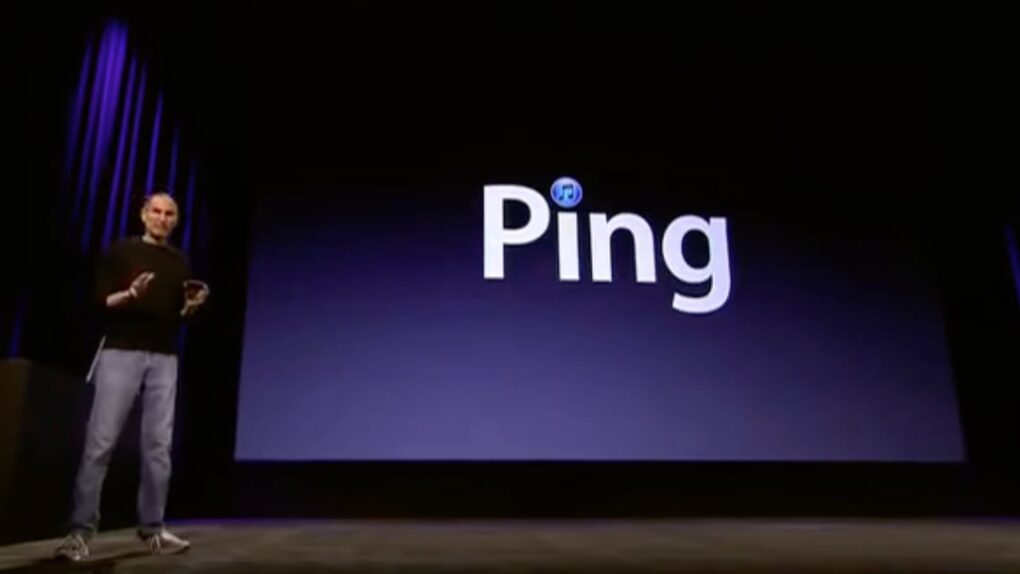
 September 1, 2010: Apple’s new music-focused social network, Ping, ships as part of iTunes 10. Apple says the service will let users discover new music and more easily follow their favorite artists.
“In iTunes 10, we’re announcing something really cool, and we call it Ping,” says Apple CEO Steve Jobs during his demo of the new service. “And what Ping is, is it’s a social network for music. It’s sort of like Facebook and Twitter meet iTunes. You know, it’s not Facebook, it’s not Twitter. It’s something else that we’ve come up with.”
Ping racks up 1 million signups in the first 48 hours. Nevertheless, Apple’s social network is doomed from the start.
Apple launches music social network Ping
Apple’s doomed social network Ping was supposed to turn iTunes into something more than a digital record store. The service promised to fuse music, celebrity culture and social networking, letting fans follow artists and friends to discover what everyone was listening to.
Instead, Ping became an early lesson in how hard it is to manufacture a social network simply by attaching one to a successful platform. Still, Ping offered a glimpse of the future. Today, services like Apple Music and Spotify revolve around discovery, recommendations and social signals — the very same ingredients Ping tried, and failed, to combine before the rest of the industry figured out how.
A social network built on iTunes’ back
Prior to the Ping launch, Apple dabbled in social networking. (Cupertino became the first significant tech company to advertise on Facebook.) But Ping was Apple’s first attempt at actually launching its own social network.
Aside from following artists, Ping let users post thoughts and opinions. Anyone could share details about their favorite albums and songs. Plus, they could view concert listings and tell friends about upcoming shows they planned to attend.
“iTunes is the number one music community in the world, with over 160 million iTunes users in 23 countries, and now we’re adding social networking with Ping,” Jobs said in a press release when the service launched. “With Ping you can follow your favorite artists and friends and join a worldwide conversation with music’s most passionate fans.”
In some ways, Apple seemed perfectly poised to launch a music-focused social network. The company projected a cool, youthful image. Plus, it benefited from brand-loyal customers, wide reach, good standing in the music community and — thanks to its success with iTunes and the iPod — a history of delivering music-related tech in a way that other companies failed to do.
Ping fails to gain traction
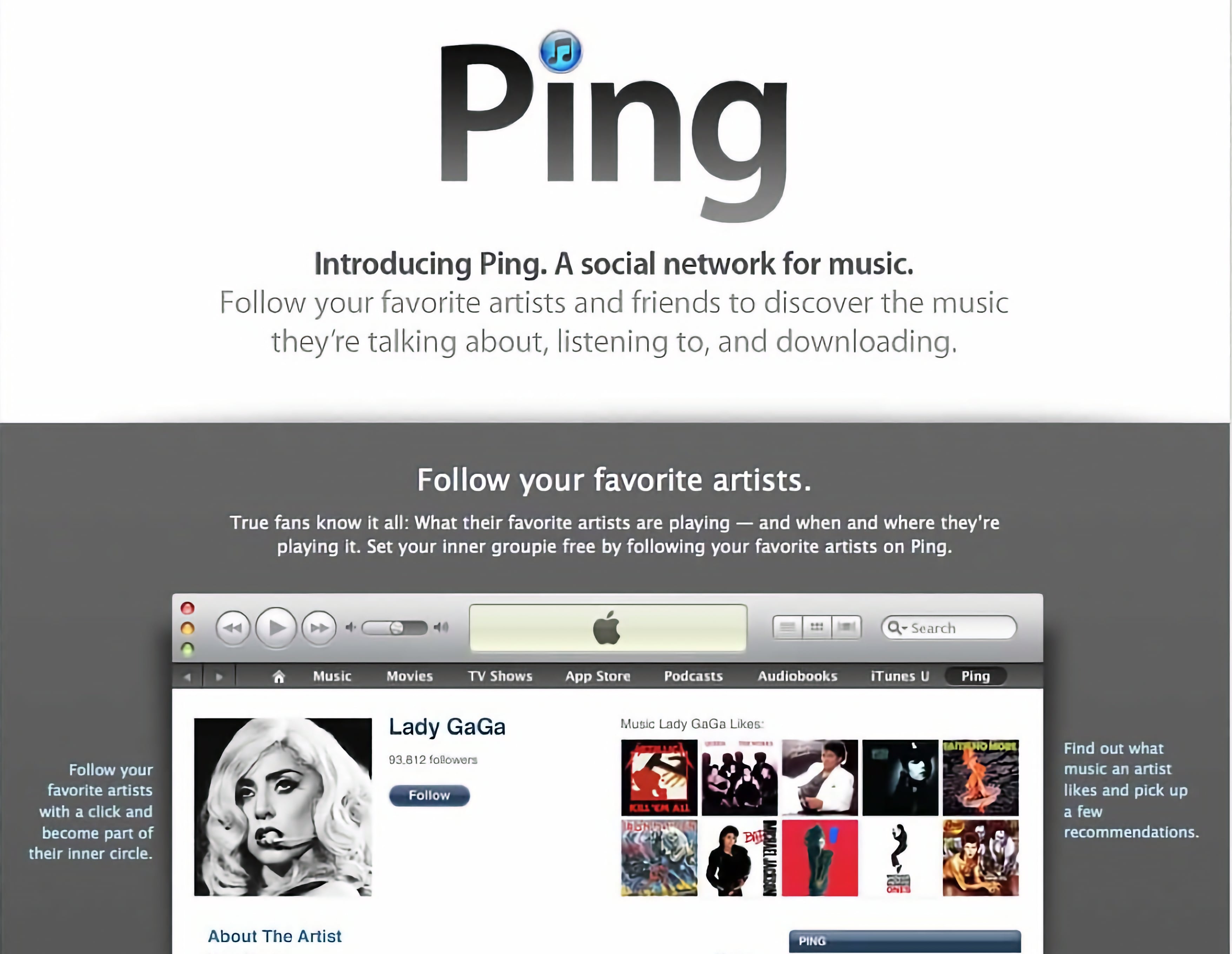
Photo: Apple
Early on, Apple experienced significant success with Ping. However, things went downhill after Cupertino crowed about the 1 million users who signed up in the first 48 hours.
To start with, Ping did not exemplify Apple design at its best. It proved too fiddly to use, and felt less like a true social network than an attempt to sell music by adding a veneer of interaction on top of the iTunes Music Store. Plus, Ping lacked Facebook integration due to a (never entirely explained) breakdown in negotiations between the two companies.
Ultimately, Ping became another failed attempt by Apple to enter the internet services space (following its failed MobileMe experiment and the disastrous eWorld launch in 1994).
Apple pulls the plug on Ping social network, focuses on building Apple Music
The writing was on the wall for Ping from early 2012, when new Apple CEO Tim Cook discussed the service’s lack of traction at the All Things Digital conference.
“We tried Ping and the customer voted and said, ‘This isn’t something I want to put a lot of energy into,'” Cook said. “Some customers love it, but there’s not a huge number that do, so will we kill it? I don’t know. I’ll look at it.” Cook also said Apple didn’t “need to have a social network.”
Apple shut down Ping on September 30, 2012. Two years later, Apple bought Beats Electronics for $3 billion and used the acquisition to fuel its own music streaming service. Rebranded as Apple Music, the subscription service launched on June 30, 2015.
With 24/7 radio stations, top 100 song charts and other music-discovery features, Apple Music today fulfills some of the promise of Ping.
Do you remember Apple’s failed Ping social network? Leave your comments below.

Luke Dormehl is a U.K.-based journalist and author, with a background working in documentary film for Channel 4 and the BBC. He is the author of The Apple Revolution and The Formula: How Algorithms Solve All Our Problems … and Create More, both published by Penguin/Random House. His tech writing has also appeared in Wired, Fast Company, Techmeme and other publications.

