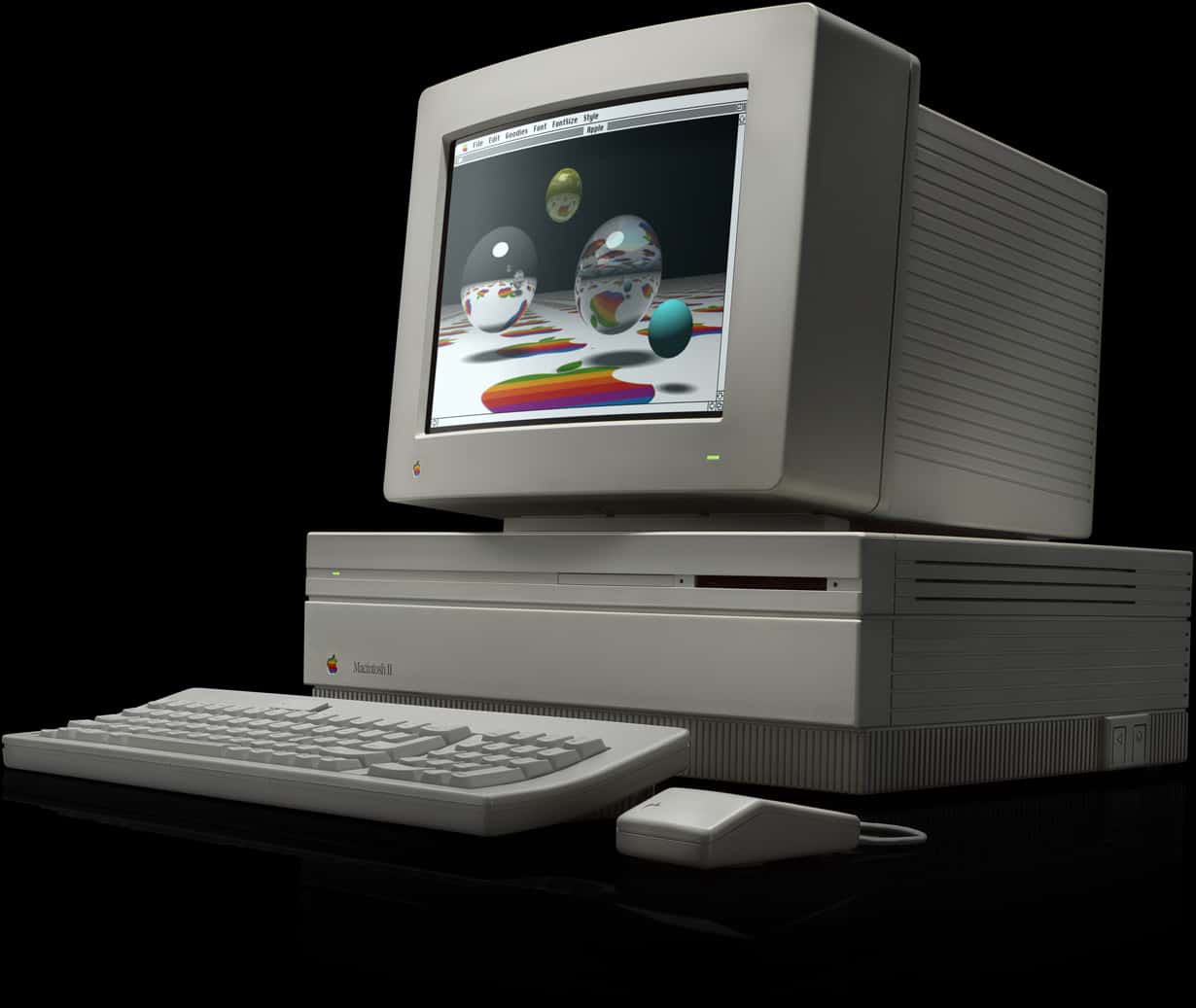
 March 2, 1987: Three years after releasing the original Macintosh 128K, Apple launches a proper sequel, the almighty Macintosh II.
Although four Mac models already have been released, the definitive, full-number name of the Macintosh II makes clear that this is a major upgrade for the product line. With a massive hardware boost, optional color display (!) and a new open architecture, it does not disappoint!
Macintosh II launch brings open architecture
By far the biggest change with the Macintosh II? Its open architecture, which allowed users to expand the computer. More than just a tech upgrade, this marked a fundamental shift in the way Apple engineers thought about the Macintosh.
The main argument against making the Mac expandable had come from Apple co-founder Steve Jobs. Unlike the hobbyist computers that came before it, Jobs’ vision for the Mac was for a computer that “just worked.” Ideally, there would be no reason for Mac owners to need (or want) to open up their machines and tinker with their insides.
By the time the Macintosh II began development, however, Jobs was out of Apple and working on his NeXT Computer at the startup he eventually sold back to Apple. Without Jobs’ input, the Mac II’s philosophy owed much more to the open architecture of the Apple II. (Even the use of Roman numerals in the Macintosh II’s name paid tribute to that long-lived computer).
With the Mac II, users could expand their Macs without voiding their warranties for the first time. Six NuBus slots allowed for component upgrades and the insertion of expansion cards. Because of this expandability, some people referred to the Mac II as the “Open Mac.”
Mac II: A color display and some pretty impressive hardware
In an age where every computer display offers millions of colors as standard, it’s worth reminding younger readers that color wasn’t always taken for granted on home computers. The first-gen Macintosh was strictly monochrome. So, the prospect of being able to translate the Mac’s graphical interface into color proved a pretty mouthwatering prospect.
Buyers could slum it by buying a cheaper Macintosh II with a monochrome display. However, those who opted for the color option enjoyed a new standard. The Mac II boasted a 16.7 million true color palette (although the computer could display only 256 of them on-screen at any one time).
Users were not confined to the small, 9-inch monitors that came with previous Macs, either. The Mac II’s freestanding 13-inch monitor might seem small compared to today’s massive displays, but it felt incredibly roomy to users in 1987.
Macintosh II specs
These weren’t the only ahead-of-their-time features of the Macintosh II. Compared to the underpowered original, the Mac II excelled from a performance perspective. It packed an impressive 16 MHz Motorola 68020 processor, a 68881 floating-point coprocessor, up to 4MB of RAM and up to an 80MB hard drive.
The Mac II’s audio was also very good for its day. The computer used a four-voice stereo custom sound chip for the first time. It delivered a maximum frequency of 7.5 kHz and a sample rate of 44.1 KhZ.
This all added up to a hefty price tag, however. Anyone complaining that today’s Macs are pricey should consider this: A fully kitted-out Macintosh II cost $7,145 retail in 1987 dollars, the equivalent of more than $20,450 today. This was the era of Apple’s “high right” strategy for the Mac, where the computer led the way on both performance and price.
The idea behind offering a higher-priced Mac like this was that it might appeal to businesses. In fact, such a machine might seem like a bargain in terms of price versus performance when compared to the expensive workstations it competed against.
Do you remember the Macintosh II? Leave your comments below.

Luke Dormehl is a U.K.-based journalist and author, with a background working in documentary film for Channel 4 and the BBC. He is the author of The Apple Revolution and The Formula: How Algorithms Solve All Our Problems … and Create More, both published by Penguin/Random House. His tech writing has also appeared in Wired, Fast Company, Techmeme and other publications.

3 responses to “Today in Apple history: Here comes the Macintosh II”
Sigh….the good old days!
I had one of those. Color Mac, it was fantasmorgasmical…
I worked for AT&T between 84 and 89 in the Data Systems division, working on UNIX System V mini computers and AT&T PCs, which were OEM’d from Olivetti. Sometime not long after the Mac II was launched Apple exhibited at Uniform Dallas. They were to debut A/UX, a color capable windowed version of the UNIX operating system based on Unix V, 4.2BSD and Mac System 7. Most of the major players were there and kind of laughing at Apple, but their demos were compelling. Not ever expecting to win any prize as a competitor, I threw my AT&T Data Systems business card into the big lucite cube they were using for exhibition prizes. Back in our Boston office 2 weeks later a box from Apple arrived containing an Apple Keyboard, my door prize. We had a laugh till the next day when 2MB of Apple RAM and an Apple Color Monitor arrived. I put it in our demo room to see if we could get it to connect to anything we had. Flash forward a week, piece by piece a fully configured Color Mac II arrived including an 80MB hard drive preloaded with A/UX and a crash partition. I won the big prize! We used it to do oppo research (even though they used a System V kernel) for a few months then I sold it to a Mac pal at $4k, about half the cost. Tidy door prize profit for me though.