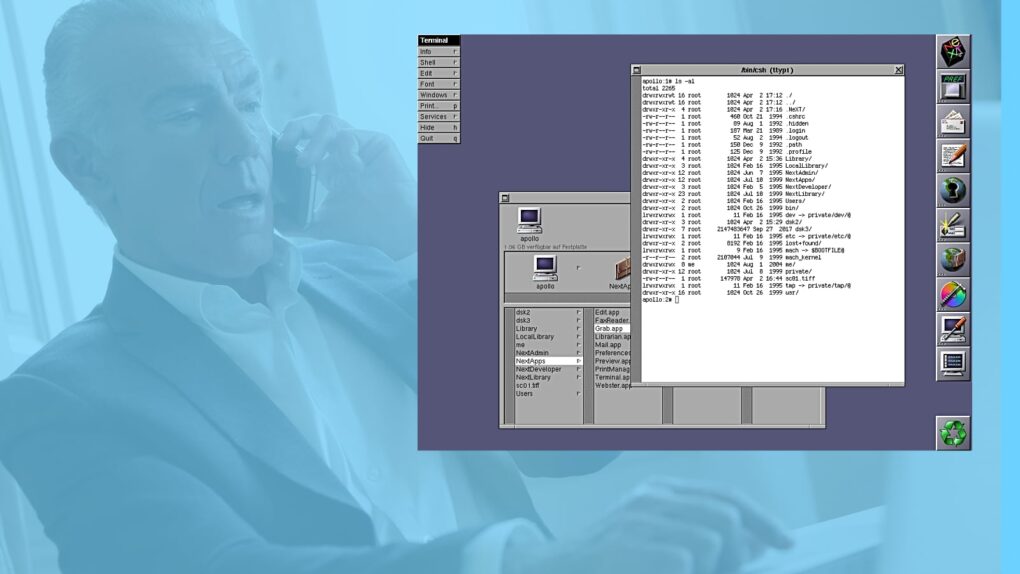
 November 25, 1996: A midlevel manager at NeXT contacts Apple about the possibility of Cupertino licensing NeXT’s OpenStep operating system. The phone call sows the seeds of Mac OS X and Apple’s rejuvenation.
The conversation in question takes place between NeXT’s Garrett L. Rice and Ellen Hancock, Apple’s chief technology officer. Rice asks if Apple might want to license NeXT’s OpenStep software. While it’s the first formal step in a long process, it’s a pivotal moment for the Mac and for Apple itself.
Phone call sows seeds of Mac OS X
The modern Mac operating system began with a phone call from a company planning an IPO to one that was struggling to right its software ship. And it ultimately led to a decision that would bring Apple co-founder Steve Jobs back to the company that drove him off.
In November 1996, Apple desperately needed a replacement for its failed Copland operating system, and the company’s future looked increasingly bleak. The conversation set in motion a chain of events that led Apple to acquire NeXT, reunite with Jobs, and build Mac OS X on the technology he had developed during his exile.
It was an extraordinary corporate rescue operation disguised as a software deal. Without that seemingly routine phone call, the Mac — and arguably Apple itself — might look very different today.
Failure of Mac OS Copland spurs Apple to consider NeXT OpenStep
Cupertino’s decision to consider licensing NeXT software started with the failure of Apple’s Copland project in the mid-1990s. That next-gen operating system never got any further than a beta version released to around 50 Mac developers.
By 1996, Apple was losing money hand over fist. The company required a software rethink that would let it compete with Microsoft’s dominant Windows 95 operating system. By this point, it became apparent that licensing Mac OS to third-party manufacturers to make Mac clones would not prove to be the magic moneymaker that Apple hoped for.
Apple CEO Gil Amelio told Mac followers the company would unveil its new operating system strategy at Macworld Expo in January 1997. However, inside Apple, it was apparent that this was more a matter of buying time than finishing off the finer points of an existing strategy that was ready for public consumption.
To BeOS or not to BeOS
One option Apple had on the table was buying the BeOS operating system developed by charismatic former Mac executive Jean-Louis Gassée. BeOS debuted in October 1995 on the zippy (and now highly sought-after) BeBox computer. The first modern computer operating system written in C++, BeOS boasted impressive multimedia capabilities. Features included symmetric multiprocessing, preemptive multitasking, pervasive multithreading and a custom 64-bit journaling file system known as BFS.
At the time, many people thought it would make a good fit for Apple. If nothing else, BeOS shared the philosophy of clear and uncluttered design that characterized Mac OS.
Gassée reportedly tried to strike a hard bargain with Apple, with Be’s investors holding out for $200 million. Apple drew the line at paying more than $125 million. (“Thank god [Apple didn’t buy BeOS] because I hated Apple’s management,” Gassée said later.)
NeXT steps toward OS X
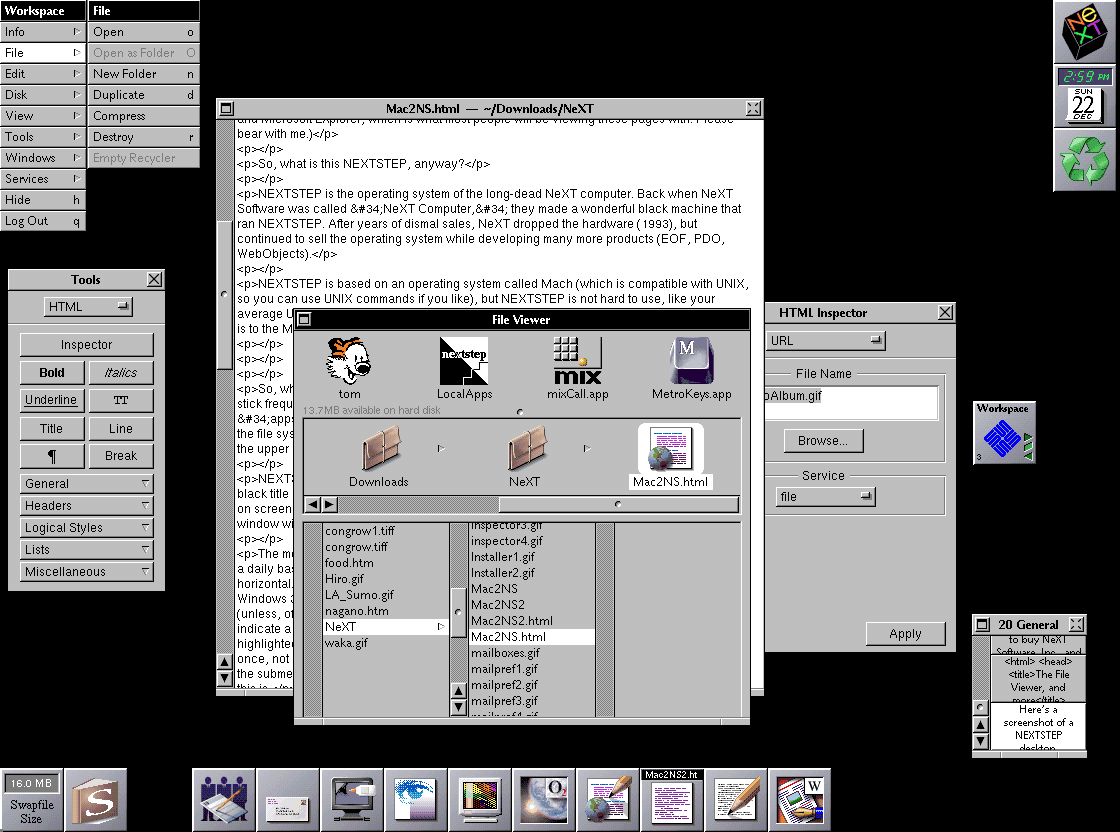
Image: The Color Convergence
The other realistic option Apple had was NeXT. The company had been Steve Jobs’ main focus in his time outside Apple (although his other company, Pixar, made him a billionaire). NeXT was ahead of its time in both software and hardware. But the company never quite lived up to its potential.
After abandoning its hardware business in 1993, NeXT focused entirely on software. By 1996, the company released OpenStep as an open-source version of its NeXTStep operating system. The object-oriented, multitasking operating system was based on Unix, which later became the basis for Mac OS X and, subsequently, macOS.
By November 1996, Jobs was speaking with Amelio again (albeit only very recently). Jobs advised the Apple CEO that BeOS was not the right choice for the company. The November 25 phone call from NeXT’s Rice presented the option Jobs surely wanted all along: that Apple acquire the rights to put a version of OpenStep on Macs.
NeXT acquisition brings Steve Jobs back to Apple
By early December, Jobs visited Apple HQ for the first time since his ouster in 1985. A subsequent deal would bring both NeXT and Jobs aboard — the best decision Apple made in years. Mac OS X Server 1.0, based on NeXTStep, arrived in 1999. And Mac OS X arrived two years later in March 2001.
Ultimately, Mac OS X didn’t just rescue the Mac. It gave Apple the technological foundation for everything that followed. Its Unix-based architecture delivered the stability, security and flexibility that made the Mac a modern computing platform. And its elegant interface helped distinguish Apple from the Windows-dominated PC world.
The same core technology underpins macOS, iOS, iPadOS, watchOS and the software running across Apple’s entire ecosystem today. Just as importantly, Mac OS X gave Steve Jobs the platform he needed to rebuild Apple into a $5 trillion technology powerhouse.
What began as a solution to an existential software crisis became one of the most consequential decisions in the company’s history.

Luke Dormehl is a U.K.-based journalist and author, with a background working in documentary film for Channel 4 and the BBC. He is the author of The Apple Revolution and The Formula: How Algorithms Solve All Our Problems … and Create More, both published by Penguin/Random House. His tech writing has also appeared in Wired, Fast Company, Techmeme and other publications.


3 responses to “Today in Apple history: A phone call sows the seeds of Mac OS X (and Apple’s salvation)”
really interesting article in a while. thank you.
“Garrett L. Rice, a midlevel manager at NeXT, contacts Cupertino about the possibility of Apple licensing NeXT’s OpenStep operating system.”
Why would a midlevel manager at NeXT contact the city of Cupertino about anything related to Apple?
Apple OSX brought me back into the fold of using Apple computers again.