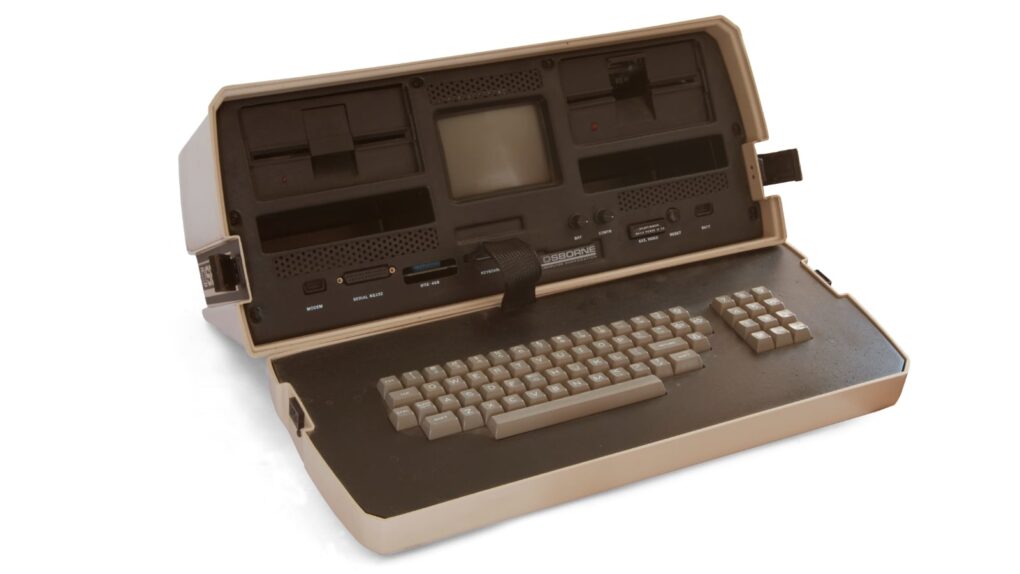
 September 13, 1983: Osborne Computer Corporation, one of Apple’s early rivals, declares bankruptcy. Many considered the company’s Osborne 1 the world’s first truly portable, full-featured computer. It packed everything users needed to set up shop at home or on the road. Alas, it didn’t last!
A brief history of the Osborne 1 computer
Clunky and underpowered, the Osborne 1 nevertheless stands out as a landmark machine. Weighing 24 pounds, with a 5-inch screen and a full-size keyboard inside a briefcase-size enclosure that locked shut, the machine “set the design standards for the first generation of ‘luggables,'” according to the Computer History Museum.
But Osborne Computer made a notoriously bad misstep that lives on in infamy, long after it set up the manufacturer’s spectacular collapse.
The Osborne 1 landed in June 1981, two months before International Business Machines Corporation released its IBM Personal Computer and ignited the long-running feud between Apple and IBM.
Never intended to be the world’s most powerful computer, the Osborne 1 boasted multiple built-in floppy drives, with a maximum storage capacity of 91K each. A Zilog Z80 microprocessor powered the machine, which came with a detachable keyboard with a numeric keypad and a built-in 5-inch monochrome display.
In a neat touch, which Apple would later include in the original Mac and the first iMac, the Osborne 1 featured a carrying handle to make it easily transportable.
A strategic misstep became known as the ‘Osborne effect’
That all sounded compelling to some business users, especially at the computer’s relatively inexpensive price point. (It cost $1,795, but came with software worth around $1,500.) However, the company made a marketing mistake for the ages. It confidently said two other, even better Osborne computers would follow the Osborne 1.
That strategy ultimately backfired, discouraging customers from buying the existing model. The press nicknamed this social phenomenon the “Osborne effect.”
In the end, a series of similarly bad decisions by founder Adam Osborne led to the company’s September 13, 1981, bankruptcy. Later that month, a group of investors filed suit against the company, looking for $8.5 million in damages for apparent insider trading. They also accused Osborne of covering up the company’s perilous financial situation.
Osborne Computer eventually came out of bankruptcy, but the company was never the same.
Apple computers vs. the Osborne 1: Perfectionism versus ‘good enough’
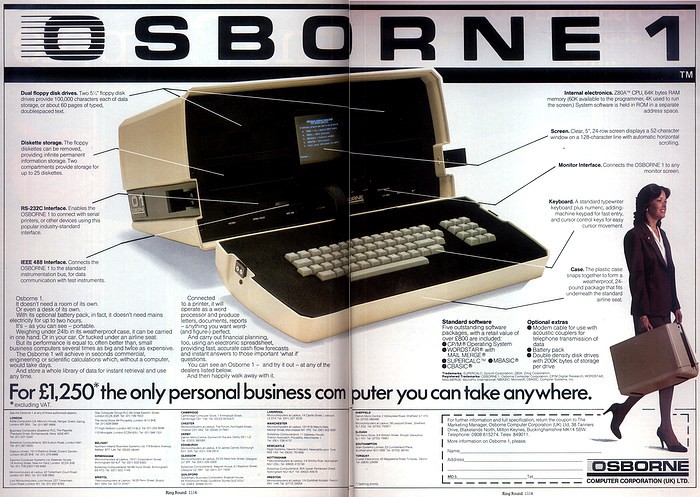
Photo: Osborne Computer
Apple’s competition with Osborne Computer is interesting as a historical footnote, but it goes further than that. In fact, it represents the first of many design-oriented philosophical disagreements that characterized every major rivalry Apple later became involved in: Apple versus IBM, Apple versus Microsoft, Apple versus Google, and, most recently, Apple versus Samsung.
The Osborne 1 computer was not great even by the standards of the day. But for a time, it sold well. The war was therefore between Apple’s perfectionist tendencies and Osborne’s “good enough” attitude.
“Adequacy is sufficient,” Osborne once stated. “All else is superfluous.”
Apple co-founder Steve Jobs hated that sort of approach. “This guy just doesn’t get it,” Jobs said of Osborne and the Osborne 1 computer. “He’s not making art, he’s making shit.”
Apple versus Osborne Computer Corporation
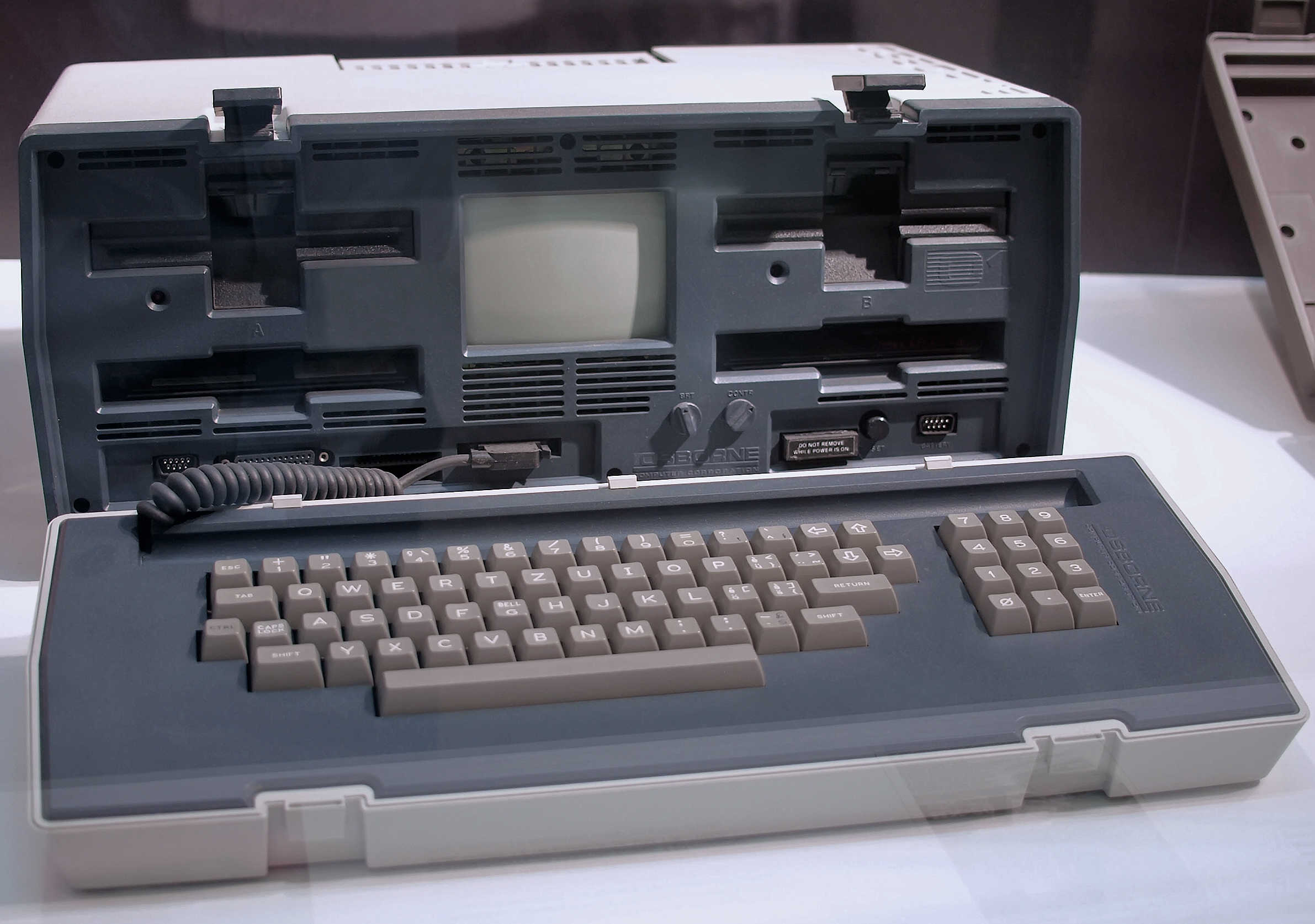
Photo: Tomislav Medak/Flickr CC
As with so many early personal computing rivalries, the main players in the Osborne-versus-Apple clash knew each other. Lee Felsenstein designed the Osborne 1 computer. Felsenstein also moderated the Homebrew Computer Club, a hobbyist meet-up that Jobs and Apple co-founder Steve Wozniak attended. (That’s where they first showed off the Apple-1 in 1976.)
Osborne regularly attended Homebrew meetings, too. He often wound up other people at the sessions by endlessly talking about his upcoming machines. Later on, he needled Jobs about rumors that Apple was building the Macintosh.
“What’s this ‘Macintosh’ I keep hearing about?” he once asked Jobs. “Is it even real?”
On one occasion, he pushed Jobs too far.
“Adam,” Jobs said, “it’s so good that even after it puts your company out of business, you’ll still want to go out and get one for your kids.”
It was a good quip. But by the time the Mac launched in 1984, Osborne’s time as a major threat to Apple’s success had already passed.
Do you remember the Osborne Computer Corporation and the Osborne 1? Leave your thoughts and comments below.

Luke Dormehl is a U.K.-based journalist and author, with a background working in documentary film for Channel 4 and the BBC. He is the author of The Apple Revolution and The Formula: How Algorithms Solve All Our Problems … and Create More, both published by Penguin/Random House. His tech writing has also appeared in Wired, Fast Company, Techmeme and other publications.

9 responses to “Today in Apple history: One of Apple’s earliest rivals bites the dust”
Commodore 64 was the real rival.
It’s so sad. Had two of ’em, and nearly went insane trying do a term paper on MS Word, on 5″ monitor, due the next day. Got it done, nobody died, but probably cut 10 years off my life. Loved ’em, used them at the office and home, but when Mac SE’s came out, off to the attic of baffling antiquities…
Had one. Weighed a ton, tiny screen. This was never a rival to the Mac. It was a predecessor that happened to linger for a couple of years. I sold it (for cash money, believe it or not) and switched to the Atari ST for music production (amazing dongles with MIDI and cartridge support – hair-pulling but powerful C-Lab Notator software / now known as Apple Logic), then got an amazing LC I when they came out and never looked back.
Ogled an Osborne, almost bought a Kaypro, then grabbed an insanely pricey 128K Mac in August 1984, and I’ve never looked back since.
I had a professor who had one of those and liked it so much that he bought a second one! He got really long arms from carrying them around all.the time 😸
Oh I remember it. My mentor bought ‘improved’ versions of the Osbourne that Kaypro put out. The Kaypro II contributed to Osbourne’s fall off the cliff.
I had several Osborne from model with yellowish case to better grey case model with hard disk.
Very reliable though recall standing in my hotel room in Lagos, stark naked as air conditioning failed, adjusting speed of floppy disk drive.
Sadly ceased to use when 286 then 386 then 486 etc came along.
Somebody owed me money and gave me an SX-64 instead. (This was the luggable version of the Commodore 64, built like an Osborne but far smoother and streamlined.) Since I already had a C-64, it seemed like a pretty good deal…except that by the next time the Navy sent me to sea, I actually had a 286 laptop with a hard drive.
A friend of mine, who had never shown an interest in computers, and hasn’t since, bought an Osborne 1. She brought it over for me to teach her how to program. It remained with me for the best part of a year. I used to write programs in basic and set the, running before heading out clubbing for the night. I’d come home hours later to see the results. Sometimes, my programs would be drawing on the screen and I’d have to wait till the next day to see what the machine had come up with. It was slow but the novelty made it more exciting to use than all the computers and devices I’ve owned since.