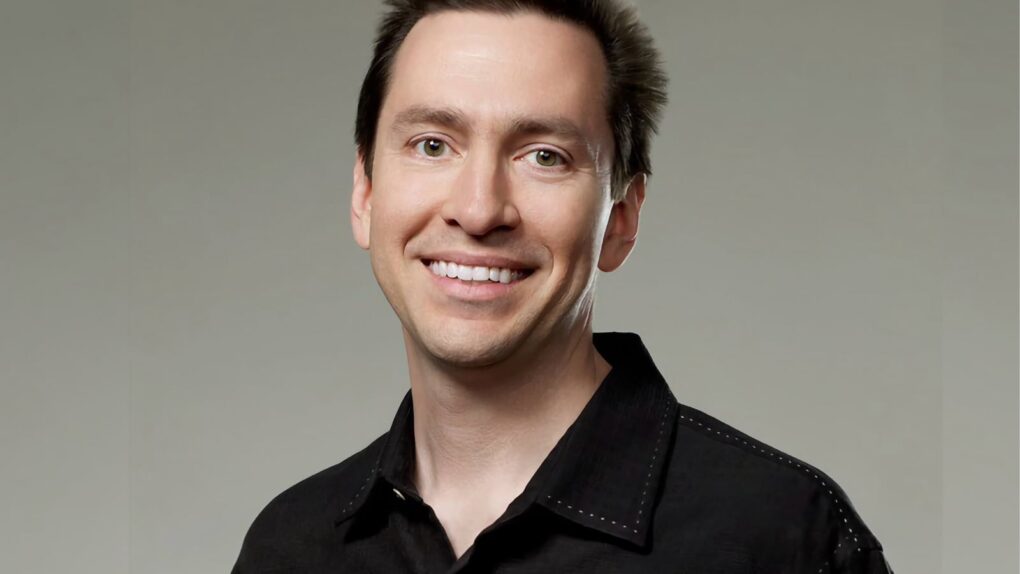
 October 29, 2012: Scott Forstall, Apple’s senior vice president of iOS software, is fired from the company after the disastrous Apple Maps launch. After Forstall’s ouster, Apple divvies up the roles he previously handled among other high-level execs.
Design chief Jony Ive assumes leadership of the Human Interface team. Craig Federighi becomes head of iOS software. Eddy Cue takes control of Maps and Siri. And Bob Mansfield “unretires” to lead a new technology group.
Scott Forstall fired after quick rise at Apple
Apple Maps once sent drivers toward nonexistent roads, misplaced landmarks, and generally made people wonder whether Cupertino had forgotten how to make software. The fiasco became a defining test of Apple after Steve Jobs’ death — and cost Scott Forstall, the powerful executive who helped build the iPhone‘s operating system, his job.
Forstall had been one of the last senior leaders closely associated with Jobs’ combative, detail-obsessed style, but new CEO Tim Cook wanted something different: a company where design, software and services worked together, without executives fighting over territory. Forstall’s exit in 2012 therefore marked more than the fallout from a botched app. It was a turning point in Apple’s culture.
The firing of Forstall, who once seemed on a path to the top at Apple, triggered one of the biggest executive shakeups at the company since Steve Jobs’ return in 1997. And Forstall wasn’t the only one to get the ax after the Apple Maps debacle.
Scott Forstall’s quick ascendancy in Cupertino
Forstall worked for Jobs his entire career. Straight out of Stanford University, Forstall had been hired at NeXT, the company Jobs founded during his wilderness years outside Apple. With a master’s degree in computer science, Forstall worked on the NeXTStep operating system.
He joined Apple along with other senior staffers when the company bought NeXT in 1996, an acquisition that brought Jobs back to Cupertino. Jobs immediately put Forstall in charge of designing user interfaces for the new, improved Mac line. His big contribution? The liquid-inspired Aqua user interface, which incorporated design elements like translucent icons and reflections.
Forstall then took charge of OS X, which was based on NeXTStep technology, before becoming one of the leading figures in iOS development. In late 2011, he got onstage at the iPhone 4s keynote to show off Siri for the first time.
The beginning of the end for a rising star
Forstall modeled himself on Steve Jobs, even driving the same type of silver Mercedes coupe as Apple’s iconic co-founder. He also exhibited extreme attention to detail and a similar type of charisma. (Forstall was more confident than many tech types, having been a child actor.) As evidence of the former, he kept a jeweler’s loupe in his office, allowing him to examine each pixel on a user interface in detail.
Outside Apple, some people assumed Forstall could eventually become CEO of the company. But after Jobs’ passing, Forstall seemed to lose momentum within Cupertino’s halls. One possible reason? A power struggle with Jony Ive, probably Apple’s most valued human asset after Jobs. In particular, Ive and Forstall clashed over skeuomorphism, which Forstall loved and Ive hated.
New Apple CEO Tim Cook also preferred a more harmonious atmosphere within the company than Jobs ever did. Whereas Jobs liked strong personalities who clashed, Cook reportedly does not.
Disastrous Apple Maps launch leads to Scott Forstall being fired
The inciting incident that resulted in Forstall’s firing was the aforementioned disastrous Apple Maps software. Probably Apple’s most notable software failure of all time, the navigation app proved buggy and undeveloped compared to Google Maps and other rivals.
In addition to that, iOS 6 featured a clock app that illegally borrowed a Swiss railway design, resulting in Apple paying out $20 million.
With Maps garnering Apple plenty of bad press, an agreement was made to write a formal apology letter — which Forstall refused to sign. This move supposedly convinced Cook that Forstall should go.
Scott Forstall after Apple
After being fired by Apple, Scott Forstall remained largely off the radar — with the exception of co-producing Broadway plays and advising Snapchat. In May 2015, he made one of his few public comments about Apple to The Wall Street Journal, saying he was “delighted” that Cupertino still makes great products.
In 2017, Forstall also gave several interviews to mark the 10th anniversary of the iPhone launch. In 2022, he served as a co-executive producer of the COVID-19 documentary How to Survive a Pandemic. And in 2023, he executive-produced It’s Only Life After All, a documentary about folk-rock duo Indigo Girls.
The ironic thing about Forstall’s firing is that Apple Maps survived, improved and became a serious competitor to Google Maps — while the executive who oversaw its disastrous debut became a footnote in the company’s story of reinvention.
What are your memories of Scott Forstall and his being fired from Apple? Let us know your thoughts in the comments below.

Luke Dormehl is a U.K.-based journalist and author, with a background working in documentary film for Channel 4 and the BBC. He is the author of The Apple Revolution and The Formula: How Algorithms Solve All Our Problems … and Create More, both published by Penguin/Random House. His tech writing has also appeared in Wired, Fast Company, Techmeme and other publications.

7 responses to “Today in Apple history: Apple fires Scott Forstall after Apple Maps’ awful launch”
And Apple couldn’t be better since….
Worst decision Apple ever made. I love Apple, but, the iOS interface has never been worse. Tim Cooks decision making ability is very bad at times. iPhone X comes to mind here too.
Amen
Yeah I really miss that felt…
And Apple couldn’t be better since….
I think Forstall was attempting to channel Steve Jobs so much to the point where he was stuck where Jobs was when he passed away and couldn’t allow the vision of the OS to grow. Not that I’m in total agreement with the direction iOS has gone without him.
And Apple couldn’t be better since….