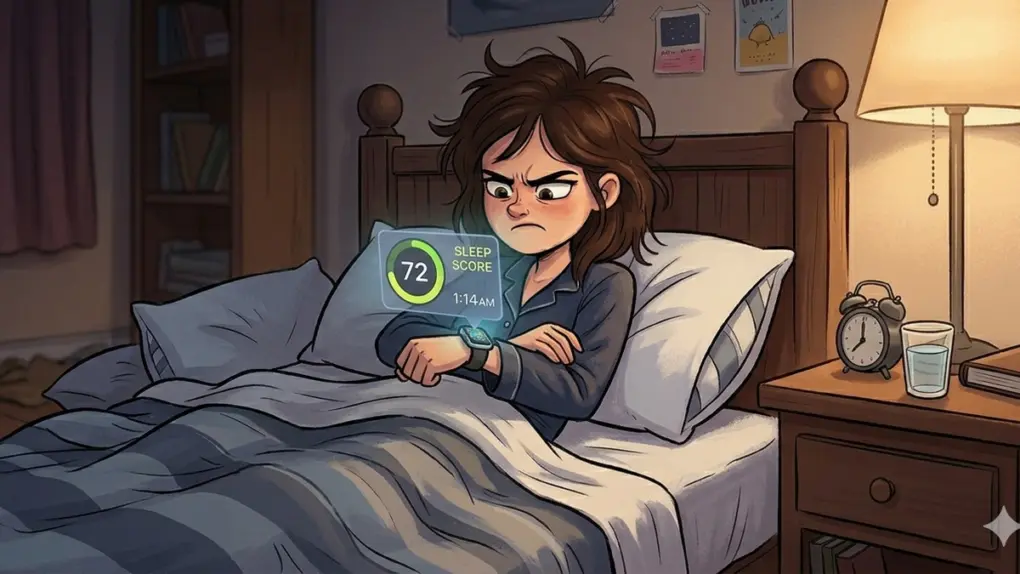
Each morning I wake up and check my sleep score on my Apple Watch. And then I wonder if it’s doing me any good. It’s certainly adding stress and hassle to my day.
That’s why I’m thinking of turning it off. Maybe you should, too.
Apple Watch sleep score is wonderful, until it isn’t
Apple’s sleep score, available through the Sleep features on the Apple Watch and tracked in Apple’s Health app, is designed to give users a simple, at-a-glance measure of how well they slept. It combines multiple factors such as total time asleep, time spent in different sleep stages like REM and deep sleep, consistency with your sleep schedule, and interruptions during the night.
Rather than focusing on just one metric, Apple uses these inputs to create a more holistic view of sleep quality, helping users understand not just how long they slept, but how restorative that sleep was.
Sounds wonderful, doesn’t it? And if you have a sleep disorder, or suspect you might, I’m sure it is. Serious athletes tracking their recovery times can benefit as well. If you need your sleep score, you should absolutely get it.
But the thing is, most people don’t need to track their sleep. And doing so unnecessarily comes with drawbacks.
Table of contents: Problems with Apple Watch sleep score
- Think you slept well? Wrong!
- Can’t trust its results
- Apple’s sleep score turns rest into a report card
- The biggie: The Apple Watch charging hassle
- How to deactivate Apple Watch sleep tracking
1. Think you slept well? Wrong!
It’s not unusual for me to wake up feeling rested, check my Apple Watch, and see a low sleep score. So I immediately question whether I really feel rested. Shouldn’t I feel more tired? I have data right here showing I slept poorly.
So, a day that started with me feeling refreshed now has me looking for reasons to feel more tired. And I’m not even out of bed yet.
Tracking my sleep is supposed to help me. Being told I slept poorly isn’t helpful.
2. Can’t trust its results
Sometimes I go to bed knowing I’m going to get a completely inaccurate sleep score, and there’s nothing I can do about it.
See, if I take a nap during the day, I don’t go to bed at my regular time. There’s no point — I’m not tired, so I’d just stare at the ceiling for a couple of hours. But because I go to bed late, I’m automatically getting a low sleep score.
And there’s a larger issue. My Apple Watch is completely oblivious to naps. And because it can’t tell I’m zonked out on a couch for a couple of hours in the afternoon and factor that into my sleep score, I don’t trust it to accurately track my nighttime rest.
3. Apple Watch sleep score turns rest into a report card
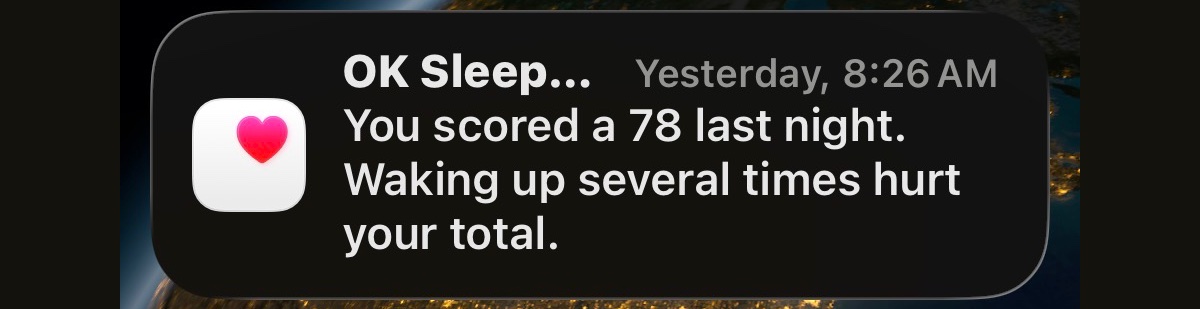
Screenshot: Ed Hardy/Cult of Mac
Plus, there’s a basic flaw in sleep tracking that makes the whole practice questionable. My Apple Watch succeeded in making me more active and healthy through gamification. It challenges me to put more effort into exercise. But I have little control over my sleep. I can’t put more effort into sleeping harder.
To increase my Move score, I can make myself go for a walk. All I can really do to affect my sleep score is go to bed earlier. When I wake up in the middle of the night, I can’t make myself fall asleep again — I assure you, I would if I could.
The result? Apple’s sleep score turns sleep into a test that I can fail for reasons beyond my control. It makes sleep more stressful, which is the opposite of what it’s supposed to accomplish.
4. The biggie: Apple Watch charging hassle
I could ignore all the other problems if tracking my sleep score didn’t make charging my Apple Watch a hassle.
I’ve worn Apple Watches for many years. I always charged them overnight while I slept, and woke up each morning with a watch that was ready to face the day.
But when I got the Apple Watch SE 3, I started tracking my sleep. I now need to wear the device all night, so I have to find a time to charge it in the morning. This means planning around exercising and making sure I get my stand time for the hour, etc. This isn’t a struggle, but it’s one more thing I have to think about — and it’s irritating because this is something I didn’t have to worry about before.
The Apple Watch is supposed to make my life easier, not add to my to-do list.
How to deactivate Apple Watch sleep tracking
Just so there’s no confusion, if you have a reason to track your sleep, then Apple’s sleep score is a great way to do it. But if you don’t, I’m suggesting that it might be more bother than it’s worth.
Put some thought into it. If you decide knowing your Apple Watch sleep score isn’t helpful, you can easily deactivate it.
To turn the feature off on your iPhone, open the Watch app, scroll down to Sleep, then toggle off Track Sleep with Apple Watch. Or on your Apple Watch, open the Settings app, then scroll down to Sleep and toggle off Sleep Tracking.

Ed Hardy has been writing full-time about tech for 25 years, and using it for much longer than that. His intro to Apple was a Macintosh SE/30 (which he still has), but now he uses a 13-inch iPad Pro as his primary computer.
That’s because he’s a “tablet first” type of guy. Rather than use a Macbook, he connects a keyboard case to the iPad. And instead of a desktop Mac, he connects his tablet to a 27-inch display and full-size keyboard. (So don’t try to tell him that everyone has to use a Mac to be productive.)
Before coming to Cult of Mac, Ed wrote for NotebookReview, TabletPCReview and Brighthand, as well as other sites.

One response to “4 reasons you should stop tracking Apple’s sleep score”
I’m pretty sure the sleep score does NOT take into account the amount of deep/REM sleep.