Apple is expanding its push into workplace services with the introduction of Apple Business, a new platform designed to give companies a single place to manage devices, communicate with customers, and grow their presence across Apple’s ecosystem.
Announced Tuesday, Apple Business bundles tools that have traditionally been spread across multiple services. The platform includes device management features for iPhones, iPads and Macs, along with business email, customer communication tools, and new ways for companies to appear in apps like Apple Maps.
“Apple Business is a significant leap forward in our decades-long commitment to helping companies of all sizes leverage the power of Apple products and services to run and grow,” said Susan Prescott, Apple’s vice president of enterprise and education marketing, in a press release. “We’ve unified Apple’s strongest business offerings into one simple, secure platform, delivering key features for organizations in every stage and sector, including built-in device management, collaboration tools, and additional ways to reach new customers.”
Apple Business: Helping companies grow
The move signals Apple’s growing interest in serving not just consumers but also small and midsize businesses that rely on its hardware. By combining IT management with customer-facing features, Apple is positioning the platform as both an operational hub and a growth tool.
Because the Apple Business platform blends several existing software categories into one package, it can benefit smaller companies that don’t want to — or don’t have the time to — stitch together five different tools to handle these necessary tasks. On the other hand, the all-in-one option might be limited compared to best-in-class solutions in each category.
The Apple Business announcement comes just weeks after the launch of the $599 MacBook Neo, an entry-level laptop designed to compete with similarly priced Windows PCs and Chromebooks.
While the Neo seems especially well-suited to students, it also could become an enterprise workhorse, since it combines solid performance with premium design — a mix previously unattainable at such an affordable price point. Adding easy management through Apple Business makes the new laptop even more attractive.
Loads of features: MDM, branding and more
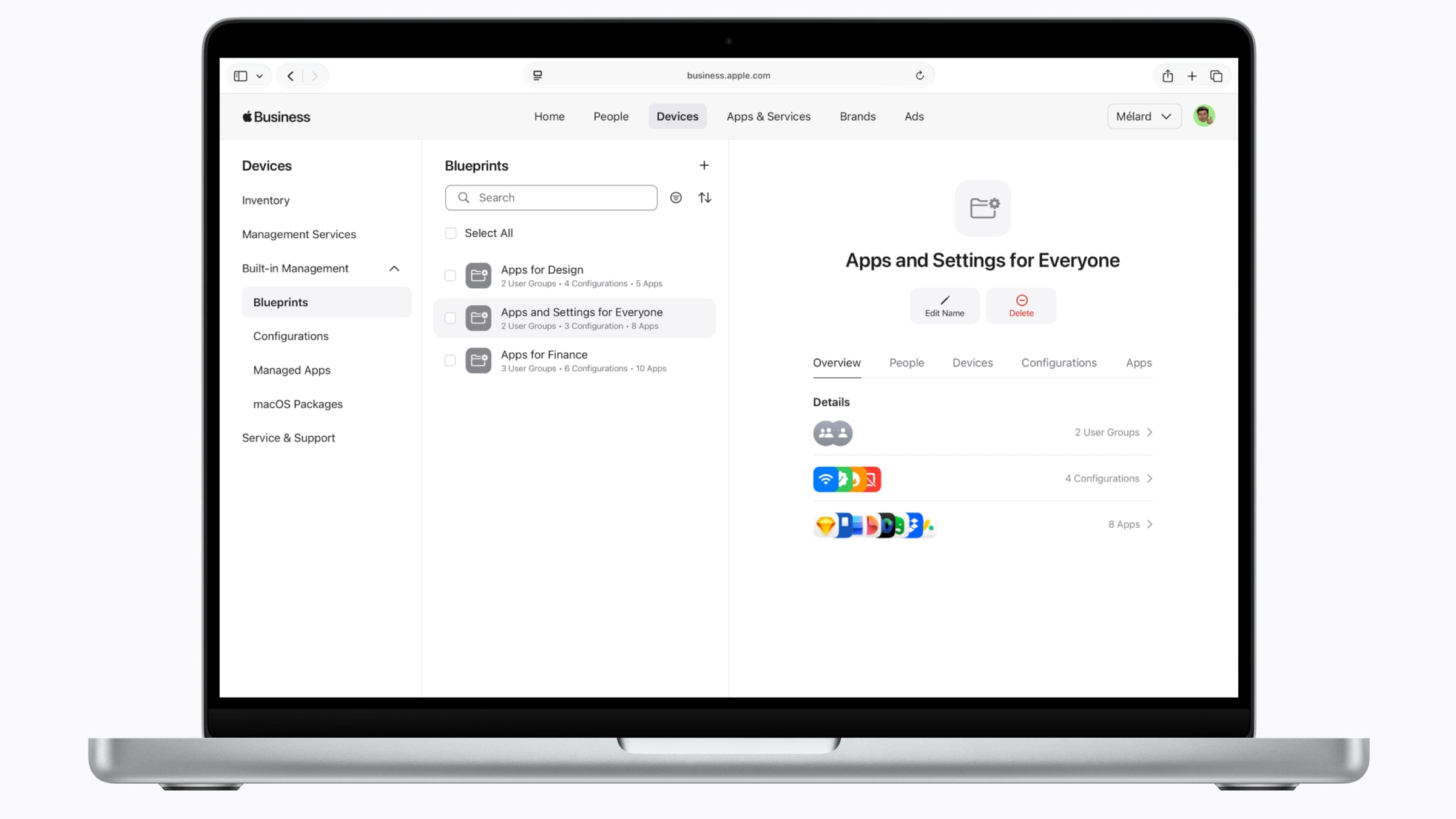
Image: Apple
Apple says businesses will be able to onboard employees, configure devices and manage security settings directly through the Apple Business service.
One key feature is mobile device management, a service offered by companies like Jamf and Iru.
“Apple Business includes new Blueprints to easily set up devices with preconfigured settings and apps, ensuring consistency and security and enabling zero-touch deployment for employees, so that new Apple products are ready to go out of the box,” Apple said.
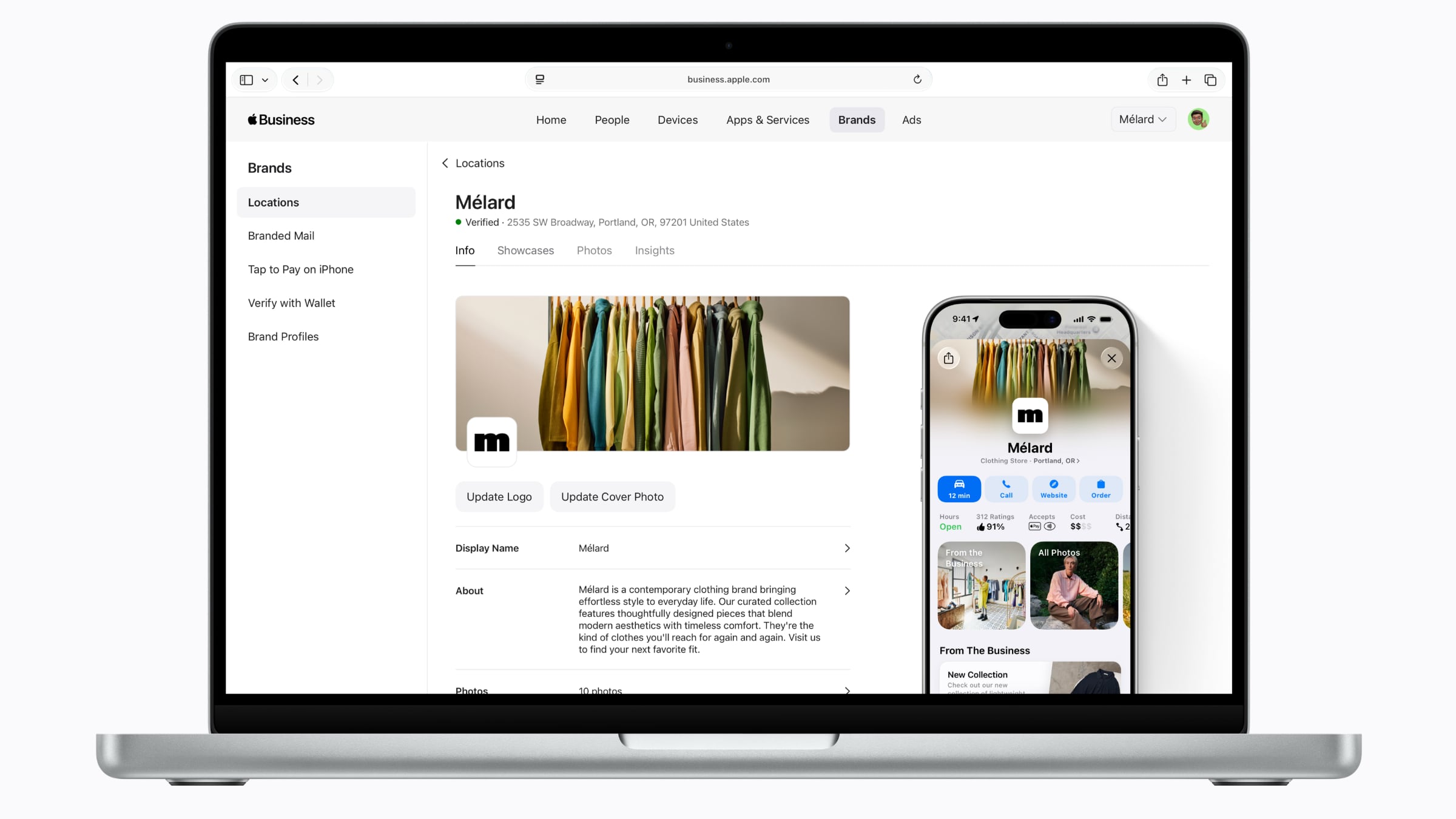
Image: Apple
At the same time, companies can create a branded presence that helps customers discover them through Apple services, such as Apple Wallet, and communicate through integrated channels.
That includes setting up ads to appear in the Apple Maps app, an option that will begin this summer in the United States and Canada.
“Ads on Maps will appear when users search in Maps, and can appear at the top of a user’s search results based on relevance, as well as at the top of a new Suggested Places experience in Maps, which will display recommendations based on what’s trending nearby, the user’s recent searches, and more,” said Apple. “Ads will be clearly marked to ensure transparency for Maps users.”
If some of this seems familiar, it’s because many of the features of the new platform carry forward features of previous offerings from the company: Apple Business Connect, Apple Business Essentials and Apple Business Manager. Apple will discontinue all three when Apple Business launches.
“Existing Business Connect data — including claimed locations, place card information, photos, organization information, account details, and more — will automatically migrate to Apple Business at launch,” Apple said.
Coming in April
Starting April 14, Apple Business will be available as a free service in the United States and 200-plus countries and regions. U.S. customers can purchase additional iCloud storage (up to 2TB per user) starting at 99 cents per user per month, Apple said. AppleCare+ for Business coverage, available either per device or per user, will start at $6.99 per month, or $13.99 per month per user for up to three devices.
For more information, visit business.apple.com/preview.

Ed Hardy has been writing full-time about tech for 25 years, and using it for much longer than that. His intro to Apple was a Macintosh SE/30 (which he still has), but now he uses a 13-inch iPad Pro as his primary computer.
That’s because he’s a “tablet first” type of guy. Rather than use a Macbook, he connects a keyboard case to the iPad. And instead of a desktop Mac, he connects his tablet to a 27-inch display and full-size keyboard. (So don’t try to tell him that everyone has to use a Mac to be productive.)
Before coming to Cult of Mac, Ed wrote for NotebookReview, TabletPCReview and Brighthand, as well as other sites.