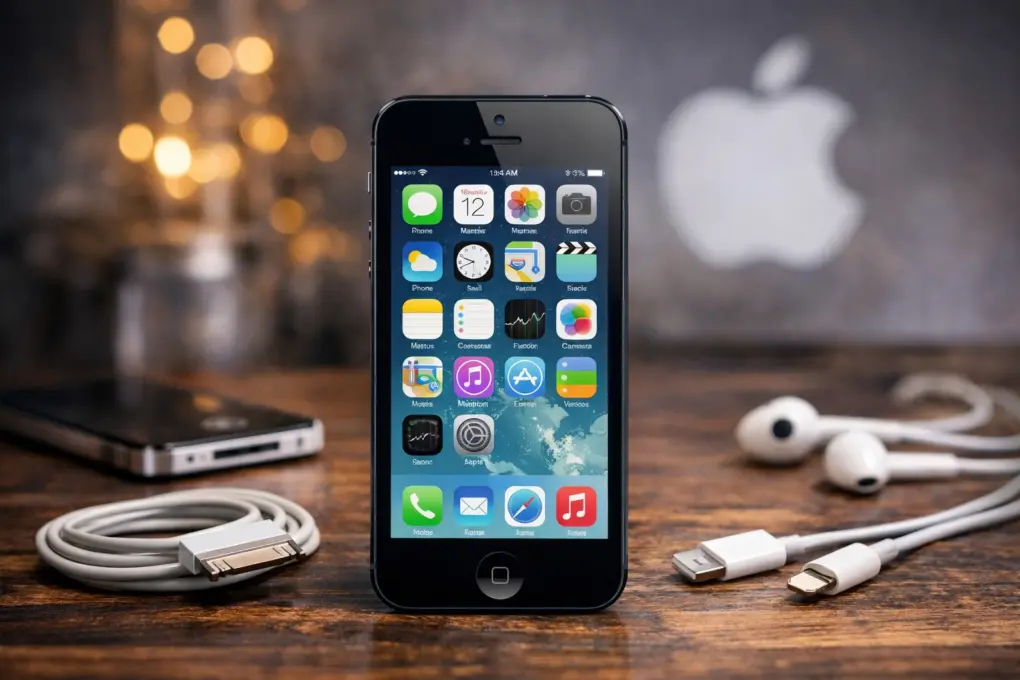
Apple’s first iPhone with the Lightning port, the iPhone 5, is now obsolete. The phone launched over a decade ago, in 2012.
Back then, the iPhone 5 stood out for its revamped design and larger 4-inch display.
iPhone 5 officially joins Apple’s obsolete list
Apple regularly marks its products as vintage or obsolete. A product is considered vintage five years after its retail sales stop. Apple considers a product as obsolete seven years after it stopped distributing them for sale.
The iPhone 5 launched in 2012, and Apple stopped selling it in 2013. Five years after that, in 2018, it marked the phone as vintage. And now, seven years later, the product is considered obsolete (via MacRumors).
That means Apple will no longer provide any hardware service or support for it. Even service providers cannot order parts for obsolete products from Apple.
Besides a lighter and thinner design, a bigger 4-inch display, the iPhone 5 replaced the 30-pin connector with the sleeker Lightning port.
Powered by Apple’s A6 chip, it delivered noticeable performance improvements over its predecessor. At the time, it helped the iPhone 5 compete more effectively with Android devices featuring bigger displays.
The iPhone 5 received its final update in July 2019, when Apple released iOS 10.3.4 to fix a GPS location issue.
By comparison, it’s possible to get hardware repairs for vintage products, though everything will depend on the availability of replacement parts.
Additionally, Apple has marked the iPhone 4 (8GB) as obsolete.
If you still have an iPhone 5 or iPhone 4 (8GB) lying around, you’ll need to take extra care of it. With both devices now marked as obsolete, Apple and its authorized service providers will no longer offer repairs or replacement parts.

Rajesh has been writing about consumer technology for over a decade, with a strong focus on iPhones, Macs and Apple’s ecosystem. He enjoys digging into Apple software updates, hardware changes, and discovering new Mac apps that make work faster and more enjoyable.