Apple on Wednesday seeded the iOS 26.4 Release Candidate to beta testers, signaling that eager iPhone users should circle March 25 on their calendars. The new version brings in fresh emoji, a tweak to Liquid Glass and other changes.
The macOS Tahoe 26.4 Release Candidate has also been released, as have equivalents for iPad, Apple Watch, Apple TV and more.
iOS 26.4 release date: Mark your calendars
Apple is constantly updating its various operating systems, bringing in new features, making changes to current ones, plus taking out bugs whenever it finds them.
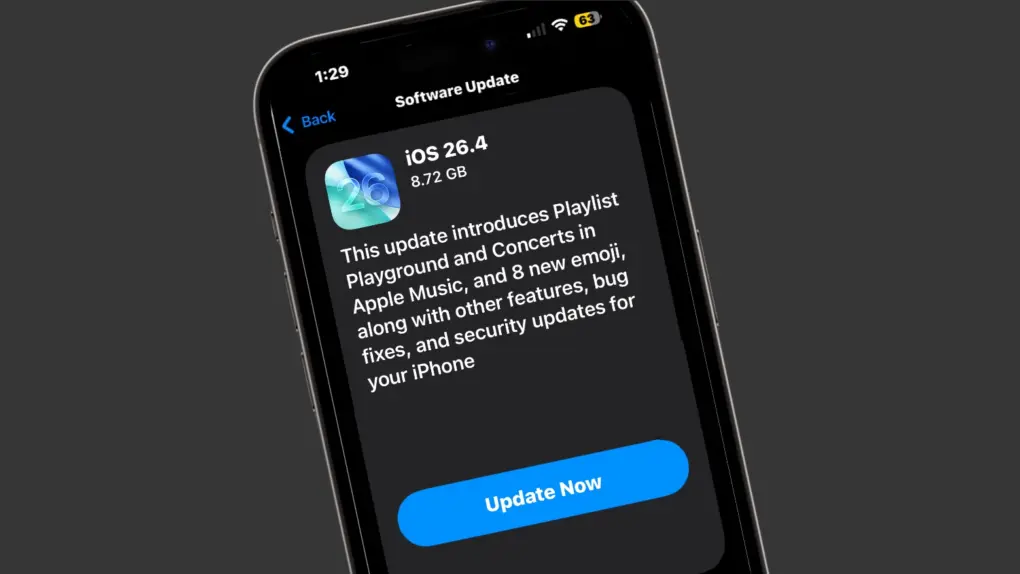
With the upcoming iOS 26.4, Apple’s release note promises that, “this update introduces Playlist Playground and Concerts in Apple Music, and 8 new emoji, along with other features, bug fixes, and security updates for your iPhone.”
Playlist Playground will let Apple Music subscribers use AI to create a playlist. Plus, Apple Music will show concerts and shows coming up nearby.
The iPadOS 26.4 description is practically identical.
iOS 26.4 beta testing began in February and went through multiple rounds that were seeded to developers to help look for bugs and other problems. Cult of Mac compiled a list of changes, including showing off the new emoji.
iPhone users should expect to access the new features and bug fixes when iOS 26.4 launches on Wednesday, March 25. That’s if Apple holds to its habit of introducing new iOS versions a week after the Release Candidates go out to beta testers, of course.
That said, there are no hard-and-fast rules, so perhaps the iOS 26.4 release date will be March 24 or March 26.
Don’t forget about macOS, watchOS, etc.
Apple typically introduces updates for all its operating systems at the same time. So if iOS gets a new version next Wednesday, then macOS Tahoe 26.4 should be available too. The same goes for iPadOS 26.4, watchOS 26.4 and visionOS 26.4.
In the meantime, those interested can install the release candidates. These give third-party software developers and other beta testers one last opportunity to look over the final versions of operating systems before they’re introduced to average users.

Ed Hardy has been writing full-time about tech for 25 years, and using it for much longer than that. His intro to Apple was a Macintosh SE/30 (which he still has), but now he uses a 13-inch iPad Pro as his primary computer.
That’s because he’s a “tablet first” type of guy. Rather than use a Macbook, he connects a keyboard case to the iPad. And instead of a desktop Mac, he connects his tablet to a 27-inch display and full-size keyboard. (So don’t try to tell him that everyone has to use a Mac to be productive.)
Before coming to Cult of Mac, Ed wrote for NotebookReview, TabletPCReview and Brighthand, as well as other sites.