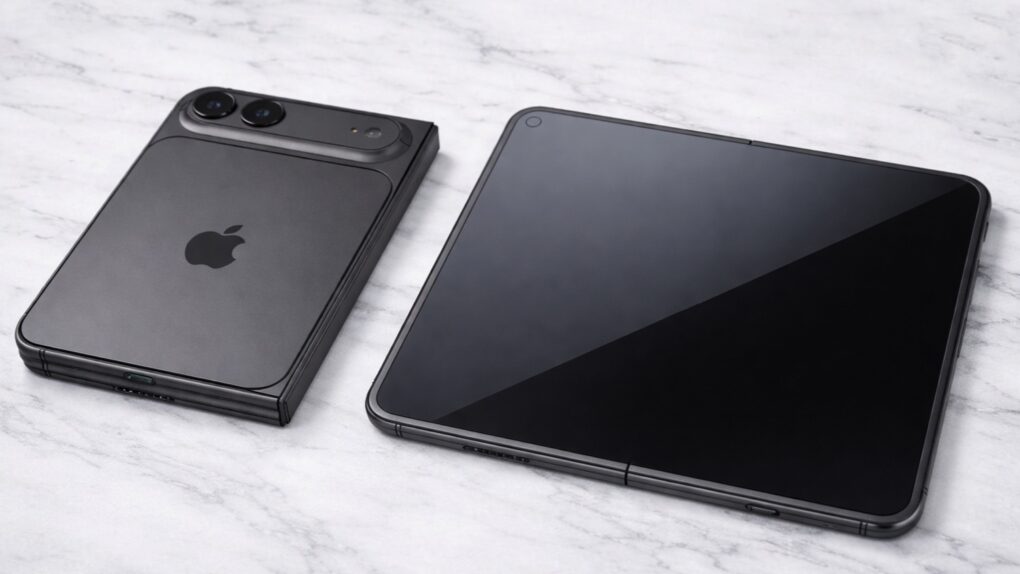
Apple signed a 3-year exclusive agreement with Samsung Display to supply the foldable OLED panels in its long-anticipated folding iPhone, according to a new report Wednesday.
Samsung will supply folding iPhone OLED panels
Foldable smartphones remain a niche category, accounting for less than 2% of the global smartphone market, with shipments totaling about 20 million units last year. Apple’s iPhone entry — backed by Samsung’s display expertise and likely to be dubbed iPhone Ultra — is widely expected to shake up that dynamic. It may bring the category the kind of mainstream attention only Apple can generate.
Under the deal, Apple will source its foldable smartphone OLED panels solely from Samsung Display for the next three years. During that time, it will not use foldable panels from any other display supplier, Korean outlet The Elec reported.
Why Samsung, and why exclusively?
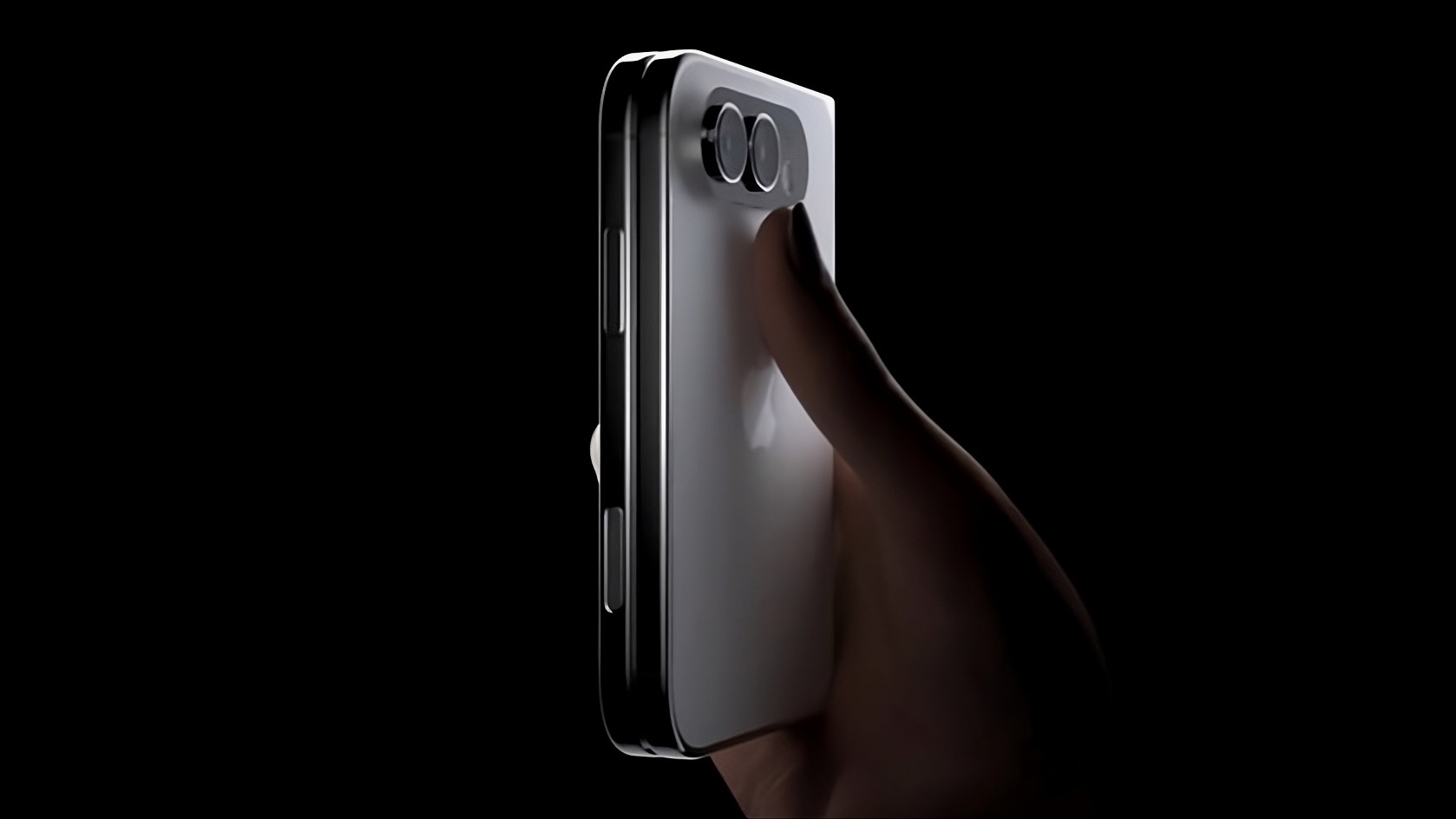
Image: Majin Bu
Samsung Display proposed the exclusive arrangement — a move that makes sense given the complicated internal dynamics at play. The group is a supplier to Apple, but its parent company, Samsung Electronics, is also one of Apple’s fiercest rivals in the smartphone market.
Samsung affiliates have historically coordinated major supply decisions involving key customers through centralized internal review processes. That suggests the exclusivity clause likely served as justification for the partnership to proceed at all.
And Apple’s options were also limited. China’s BOE Technology Group supplies foldable panels to companies such as Huawei. But the panels are viewed as falling short of Apple’s requirements in durability, quality and yield. LG Display has no track record of supplying foldable panels for smartphones. With no credible alternative, Apple accepted Samsung’s terms.
Modest initial volumes signal a cautious launch
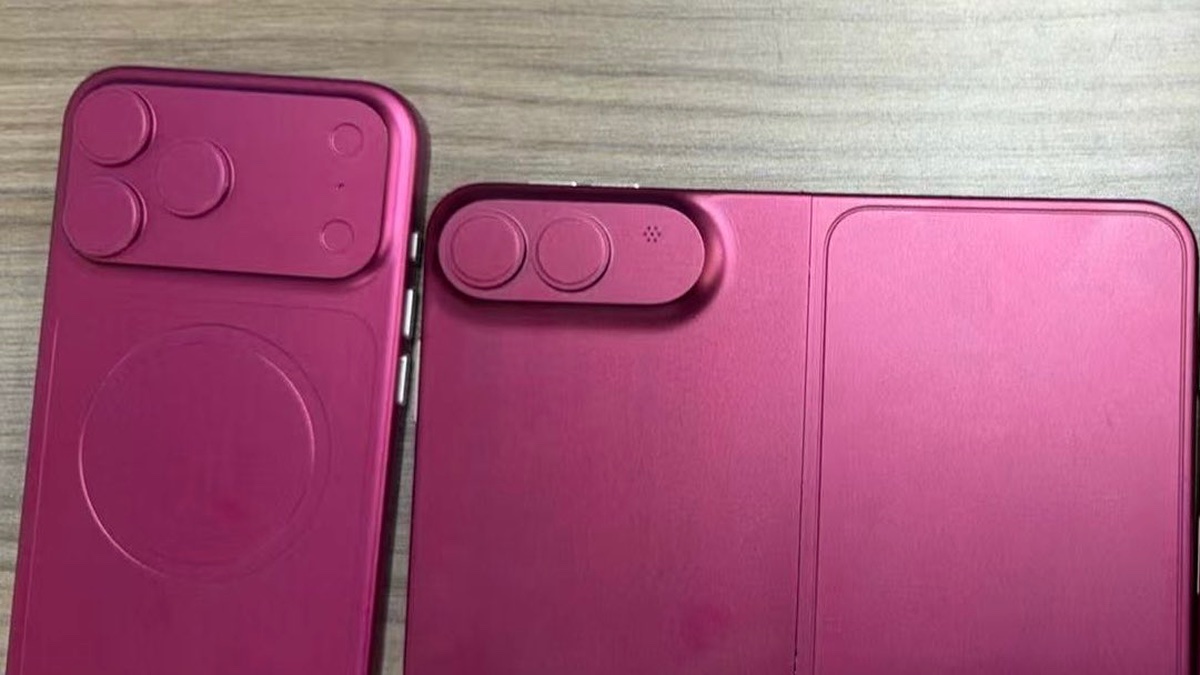
Photo: Sonny Dickson
Samsung Display plans to begin mass production of foldable OLED panels for Apple in the second quarter. Initial shipments this year are expected to total around 3 million units, significantly below earlier market expectations of about 10 million units. The lower volume reflects a strategy to gauge market response before adjusting supply.
Apple’s cautious approach follows its experience with the $3,499 Vision Pro headset, which faced weak sales amid price resistance. The company appears to be hedging its bets on another premium, first-generation product category. Apple is working to determine a price point that can generate profit while creating new demand without cannibalizing sales of its iPhone Pro lineup.
What’s inside the display
The foldable OLED panels will use CoE (Color filter on Encapsulation) technology, which removes the polarizer and forms a color filter layer on top of the encapsulation layer. In foldable structures, the use of polarizers can cause cracking at bending points. So CoE becomes a standard requirement for recent foldable panels.
Rather than developing an entirely new material stack, the OLED material set will be the same M14 used in the iPhone 17 Pro Max. Adopting a proven structure could enable some cost efficiency.
Folding iPhone OLED panels: Launch timing remains unclear

AI image: ChatGPT
Exactly when the folding iPhone will arrive in consumers’ hands remains a question. Nikkei Asia reported Tuesday the device faces challenges in the engineering test phase. That potentially delays its release from the second half of this year by several months. Bloomberg, however, reported the same day that Apple is still targeting a launch around September alongside or shortly after the iPhone 18 series.
Regardless of those device-level delays, Samsung Display’s production of foldable OLED panels for Apple will begin in the second quarter as originally planned, according to The Elec‘s industry sources.

David Snow, an expert on Apple hardware and software, writes on a variety of technological and cultural topics for Cult of Mac. They include Apple news, technology buying guides, and features about computer setups and Apple TV shows and movies.
With 30 years of experience covering technology and other subjects, he has written and edited for numerous print and online publications, including CMP Media, TechTV.com, CNET, Wired News, Red Herring magazine, Law.com, The National Law Journal and Law Technology News magazine. Among other roles, he served as executive editor of the Law.com network of websites and editorial director, technology, for ALM Media.
Snow graduated with a B.A. from Syracuse University with majors in magazine journalism and psychology. While there, he worked as a reporter for The Daily Orange newspaper and associate editor of Equal Time magazine.
Founder of the blog At the Waterline, he can be reached on X (formerly Twitter) via @atthewaterline and on Mastodon via @dsnow.