A chaotic rollout, undertrained staff and a $3,500 headset nobody could sell: a new book excerpt reveals the human cost of Apple’s retail decline through its struggles to sell Vision Pro.
Wired published a Vision Pro-focused excerpt Tuesday from Mutiny: The Rise and Revolt of the College-Educated Working Class, by Noam Scheiber. He reports on labor for The New York Times.
Vision Pro launch exposed Apple Store problems
When Apple prepared to launch the Vision Pro in early 2024, it flew hundreds of retail employees to Cupertino, required them to sign nondisclosure agreements, and asked them to store their phones in GPS-blocking Faraday bags while on campus. Workers who completed training weren’t even allowed to describe the experience to colleagues who hadn’t yet had their demo, so as not to dilute the sense of wonder.
The plan looked pretty solid on paper. But what followed was, by many accounts, a fiasco, according to an excerpt of Scheiber’s book. The author argues that Apple effectively caused the problems after spending years quietly dismantling much of what had made its stores great.
A demo script that few could master

Photo: Apple
The Vision Pro demo was genuinely complex. Before a customer could even put the headset on, employees had to scan their face, select from roughly 25 sizes of light seals, and fit them correctly. Users controlled the device through subtle eye and finger movements that took some getting used to. And the sales script that Apple prepared ran to more than a dozen screens.
The problem was that many of the people tasked with delivering those demos were not properly prepared. In recent years, Apple had come to rely more heavily on temporary workers, many of whom had only recently transitioned to permanent status by the time Vision Pro launched.
“It was the first time a lot of people had to learn a script,” said Kevin Gallagher, a longtime employee at the Apple Store in Towson, Maryland. “They didn’t have the capability of doing it.”
With stores understaffed, even the training that was supposed to happen often didn’t — at least not properly.
“I got a 20-minute demo. I got maybe 30 minutes to review the script, did a demo on one person who had went to Cupertino, and was thrown from the nest,” said Sam Hernandez, a salesperson at a flagship Apple Store in Chicago.
As a result, demos varied wildly in quality. Some employees came off sharp and confident. Others took an hour per customer. Many customers who tried the headset experienced blurry images because the device was not fitted correctly on their faces.
By about a week after launch, managers began allowing employees to read the script from an iPad rather than deliver it from memory. A few months later, many stores had abandoned the script entirely.
The deeper problem: Apple hollowed out its own stores

Photo: Apple
In part, the Vision Pro stumble resulted from the headset itself — at around 1.5 pounds, it was too heavy for extended wear, offered a limited app library, and cost $3,500 at baseline before common accessories pushed the price closer to $4,000. Apple sold fewer than 500,000 units in 2024, a far cry from the roughly 10 million Apple Watches sold in that device’s first year.
But the Wired excerpt from Scheiber’s book argues that the retail chaos pointed to something more troubling. Apple had spent years quietly dismantling what made its stores great in the first place.
Steve Jobs and company conceived the Apple Store not so much as a retail outlet but as something closer to a mission. Jobs believed deeply in well-staffed, highly trained employees. He extended generous benefits on the theory that any employee who felt second-class would make customers feel the same way. A “creative” on staff was literally a personal coach — for $99 a year, customers could book unlimited one-on-one tutorials, an arrangement that built loyalty even if it wasn’t a high-margin business.
Tim Cook brought change
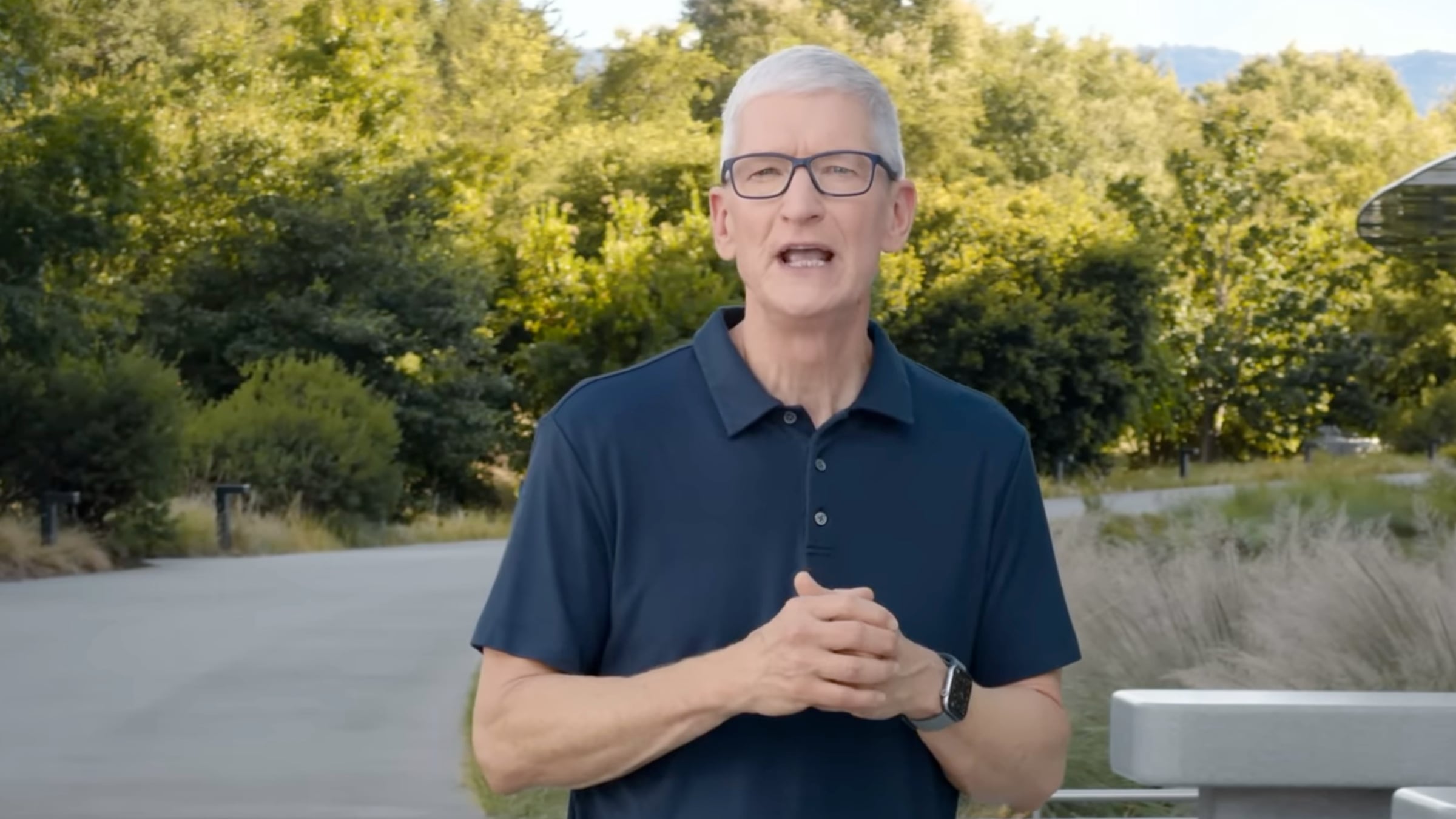
Photo: Apple
When Tim Cook took over as Apple CEO in 2011, a different philosophy took hold. Cook’s signature mantra — that inventory is “fundamentally evil” — extended to a broader drive for operational efficiency.
Apple staffed its stores more leanly. Training shifted from instructor-led classroom sessions to self-guided modules that employees clicked through alone. The personal creative role was diluted into free group sessions that increasingly felt like product marketing exercises.
“It was the dumbest session ever,” said Megen Leigh, a longtime Apple employee in Columbus, Ohio, describing a session devoted to a new keyboard. “That one was not even a veiled advertisement.”
Under Apple retail chief Deirdre O’Brien, who took over in 2019, performance metrics shifted from customer satisfaction scores toward harder sales targets: phone activations, accessory sales, and AppleCare+ sign-ups.
“We’ve become a place where you come in and someone asks you 57 times in a transaction, ‘Do you want AppleCare+?'” said one longtime store employee in the Kansas City area.
What was lost — and what it cost
Screenshot: D. Griffin Jones/Cult of Mac
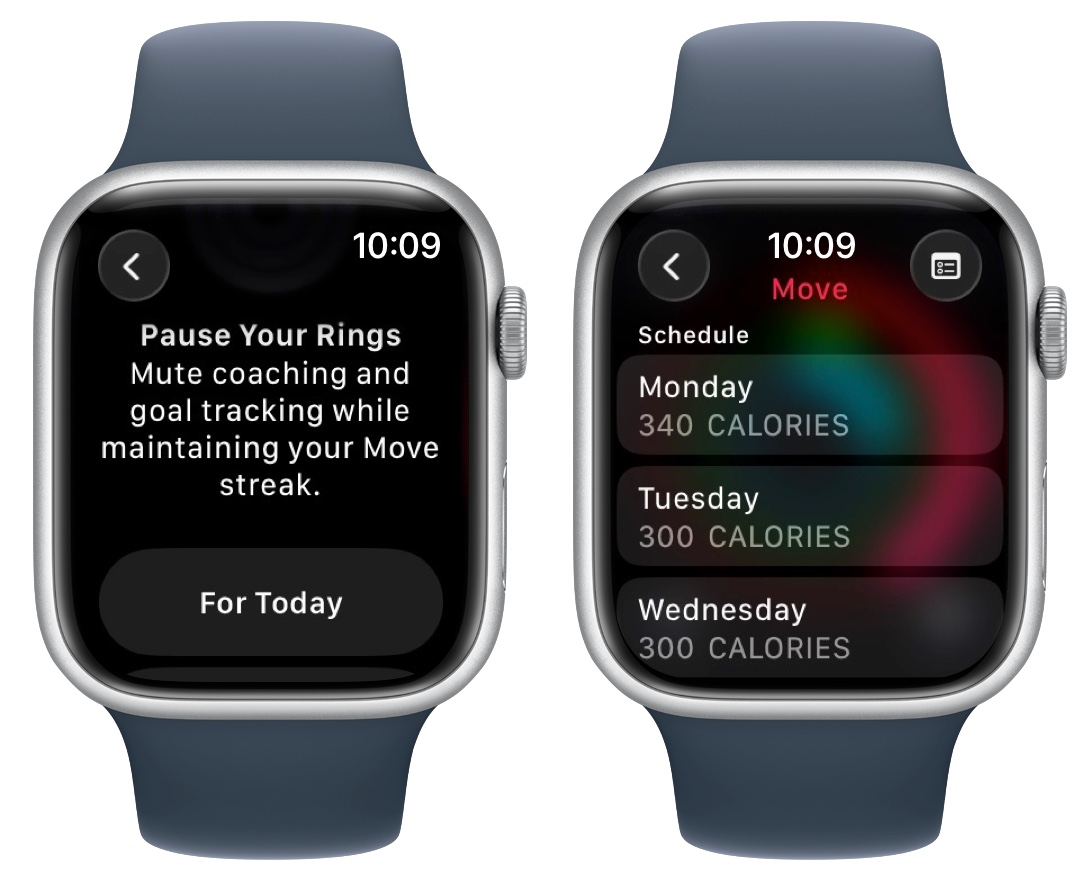
The stakes of this shift became painfully clear when compared to an earlier Apple product stumble. When Apple Watch launched in 2015 to disappointing sales, store employees — who could afford to buy and experiment with the device — helped identify its potential as a health and fitness tool. They fed insights back up the chain that helped redirect the product’s entire marketing strategy.
That loop did not function the same way with Vision Pro. Most Apple Store employees cannot afford a $3,500 headset, even with their 25% staff discount. Without hands-on experience, enthusiasm is hard to fake.
“If you own the product, you can speak to it, be enthusiastic about it,” said Eric Brown, a Towson store employee.
First unionized Apple Store
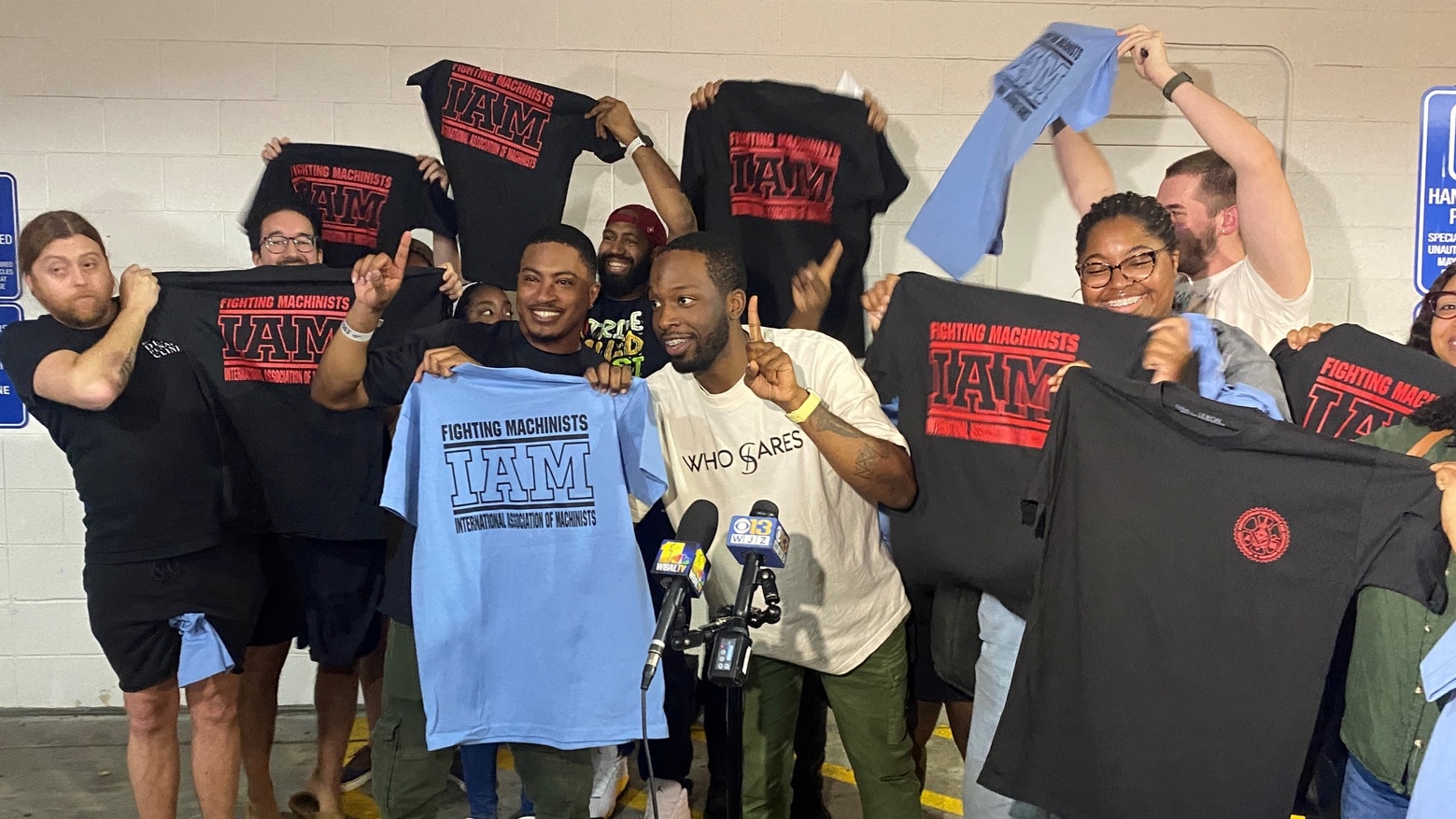
Photo: International Association of Machinists and Aerospace Workers
In the weeks after the Vision Pro launch, with demos going nowhere and sales stalling, the mood in many stores soured. At Towson — the first Apple Store in America to unionize, where workers had been locked in contract negotiations with Apple for more than a year — the irony was not lost on employees.
“We sell maybe one a week,” said Chaya Barrett, one of the workers who helped organize the union.
“Uh, none a week,” her co-worker Billy Jarboe corrected her. “If we do a return, we’re negative.”
The union and Apple eventually settled on a contract in summer 2024. It included roughly 10% pay increases over three years, limits on the use of temporary staff, and new protections against unfair dismissal. For workers like Gallagher, those rules represented a chance to reverse more than a decade of erosion. And to restore the kind of retail outlet that both customers and employees once believed in.
The Vision Pro’s rocky debut was, in the end, a story Apple told on itself. The company that prides itself on seamless experiences had spent years making the human machinery behind those experiences less capable of delivering them.
As Scheiber puts it, Apple honchos understood that selling the Vision Pro would require a deft human touch. They just didn’t seem to appreciate how much they had already degraded the very people who were supposed to provide it.
Apple has not commented on Scheiber’s book, published by Farrar, Straus and Giroux, or the Vision Pro excerpt in Wired.

David Snow, an expert on Apple hardware and software, writes on a variety of technological and cultural topics for Cult of Mac. They include Apple news, technology buying guides, and features about computer setups and Apple TV shows and movies.
With 30 years of experience covering technology and other subjects, he has written and edited for numerous print and online publications, including CMP Media, TechTV.com, CNET, Wired News, Red Herring magazine, Law.com, The National Law Journal and Law Technology News magazine. Among other roles, he served as executive editor of the Law.com network of websites and editorial director, technology, for ALM Media.
Snow graduated with a B.A. from Syracuse University with majors in magazine journalism and psychology. While there, he worked as a reporter for The Daily Orange newspaper and associate editor of Equal Time magazine.
Founder of the blog At the Waterline, he can be reached on X (formerly Twitter) via @atthewaterline and on Mastodon via @dsnow.